Personal Trainer Diet: A Coach's Guide to Client Plans
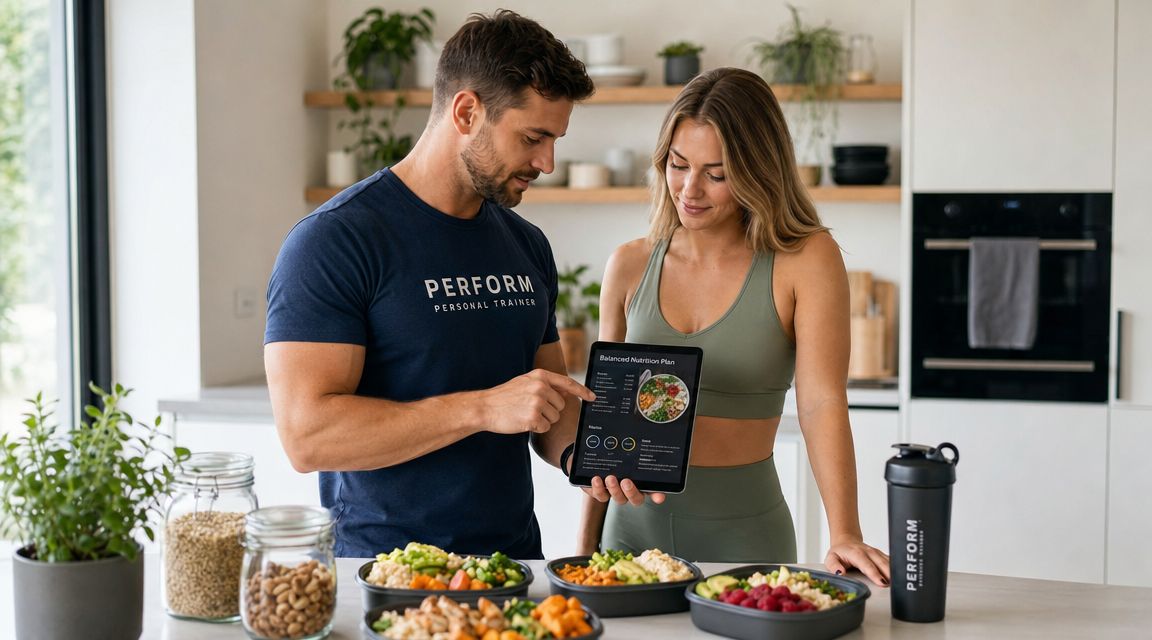
Your client trains hard, shows up on time, logs every set, and still looks the same month after month. You already know what's happening. The sessions are solid, but the food side is running on loose voice notes, half-read PDFs, and text messages sent at 9:30 p.m. after they ask, “Is this meal okay?”
That's the fundamental problem with most personal trainer diet coaching. The issue usually isn't lack of knowledge. It's lack of system.
And that matters more than a lot of coaches want to admit. A cited industry benchmark places exercise adherence after program start at generally less than 20%, which is exactly why your nutrition process has to be built for simple follow-through, not ideal behavior, according to this overview of personal training adherence. If clients struggle to stay consistent with training itself, they're definitely not going to execute a nutrition plan that lives across chat apps, notes apps, and your camera roll.
A good personal trainer diet service is not “giving food advice.” It's a professional workflow. Intake. Targets. habits. Check-ins. Boundaries. Adjustments. Referral when needed.
Table of Contents
Your Best Client Is Getting Zero Results and You Know Why
You've probably got one right now.
They train hard. Their sessions are productive. Technique is improving. Loads are going up. They're not flaky, and they're not lazy. But every time you review body comp, photos, or how they feel in their clothes, nothing meaningful has changed.
So you start doing what most coaches do. You send a few meal ideas. You tell them to eat more protein. You ask them to cut back on weekend takeout. They say they'll tighten things up, then next week you're having the same conversation again.
Practical rule: If your nutrition advice only exists as reminders and encouragement, you don't have a service yet. You have scattered support.
That's the trap. Good coaches often think better advice will fix poor adherence. Usually it won't. Clients don't need more random tips. They need a repeatable structure that tells both of you what gets collected, what gets reviewed, what changes next, and when to refer out.
Here's what works in the field:
A defined intake process that gives you food, routine, and goal data before you prescribe anything
Simple starting targets instead of hyper-precise numbers clients can't live with
Habit-based implementation so the client learns how to eat, not just what to copy
A scheduled review loop that catches drift early
Scope boundaries so you coach confidently without crossing into clinical nutrition
What doesn't work is the usual mess.
Text-message coaching because key details disappear
Rigid meal plans because real life breaks them by day three
Perfection standards because clients either hide misses or quit logging
Trying to fix nutrition in-session only because most eating decisions happen when you're not there
A personal trainer diet system should reduce friction, not add it. If it depends on motivation staying high all week, it's going to fail even with your best clients.
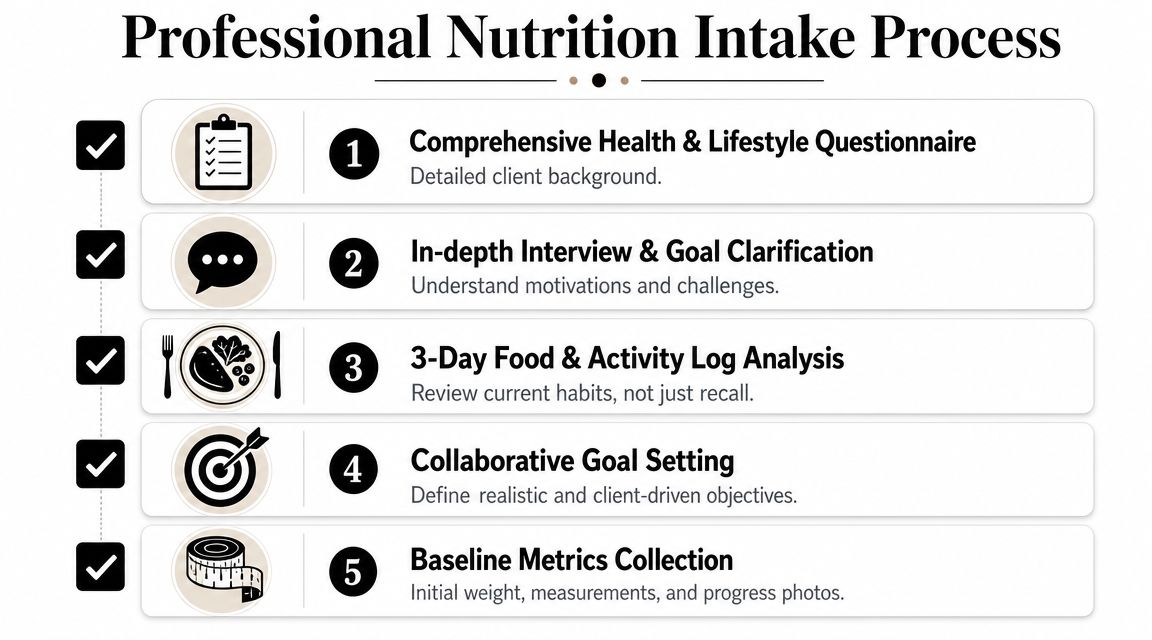
The Professional Nutrition Intake Process
Most coaches start nutrition too fast. The client says they want fat loss, muscle gain, or better energy, and the trainer jumps straight to calories, protein, and meal swaps. That skips the part that makes the plan usable.
The industry commonly treats nutrition guidance as an education-first service, and a standard intake process includes a 5 to 7 day food diary, activity level, allergies, and eating patterns before setting targets such as 0.8 to 1.2 grams of protein per pound of body weight per day, according to this trainer nutrition guidance reference.
Start with evidence, not memory
A client's recall of “what they usually eat” is almost always incomplete. You need patterns, not impressions.
Collect these first:
Food diary Ask for 5 to 7 days if possible. You want weekdays, weekends, training days, and off days. A shorter log can still help, but the point is to see normal life, not their best behavior.
Activity level Session frequency matters, but so does everything outside the gym. Step count, job demands, commute style, and general movement all shape how aggressive or conservative your starting recommendations should be.
Allergies and restrictions This is basic professionalism. It also stops you from giving advice the client can't use.
Eating patterns Look for skipped breakfasts, long gaps between meals, evening overeating, poor post-workout recovery, and “healthy during the week, chaos on weekends.”
Ask questions that expose friction
The intake isn't just about food quantity. It's about what repeatedly gets in the way.
Use questions like:
What does a normal workday meal pattern look like
Which meal is easiest for you to control
Where do you tend to lose the plot
Do you cook, batch prep, eat out, or mix all four
What usually happens after a stressful day
What's your actual goal, body composition, performance, health habits, or a mix
You're trying to find compliance bottlenecks. Some clients don't need a better macro split. They need a repeatable lunch. Others don't need more education. They need a post-training eating routine that stops them from raiding the kitchen later.
A solid onboarding flow also makes the rest of your coaching cleaner. If you're rebuilding your client intake generally, it's worth reviewing practical ideas from this guide to best client onboarding software and then adapting the parts that fit your roster and style.
Set targets the client can understand
Once intake is done, summarize the findings back to the client in plain language. That alone increases buy-in.
A useful format:
Intake finding | What it means | First coaching move |
|---|---|---|
Protein is low at breakfast and lunch | Recovery and satiety may be inconsistent | Add a reliable protein source earlier in the day |
Long gap between lunch and dinner | High chance of overeating later | Insert a planned snack or simpler afternoon option |
Weekends look unstructured | Adherence breaks when routine disappears | Set weekend meal anchors, not a full rewrite |
Calories swing hard between days | Hard to assess trend | Build a steadier meal rhythm first |
The best intake doesn't impress the client with complexity. It shows them you understand how they actually live.
If you do this well, the personal trainer diet plan becomes a response to real behavior, not a generic template with their name pasted on top.
Calculating Calories and Macros That Clients Will Actually Follow
A lot of newer coaches overestimate the value of precision. They spend too much time trying to land on the perfect calorie target and not enough time asking whether the client can follow it for a full week without resentment.
The useful middle ground is simple. Use calorie and macro numbers as a starting point, then coach based on response.
Use numbers as a starting line
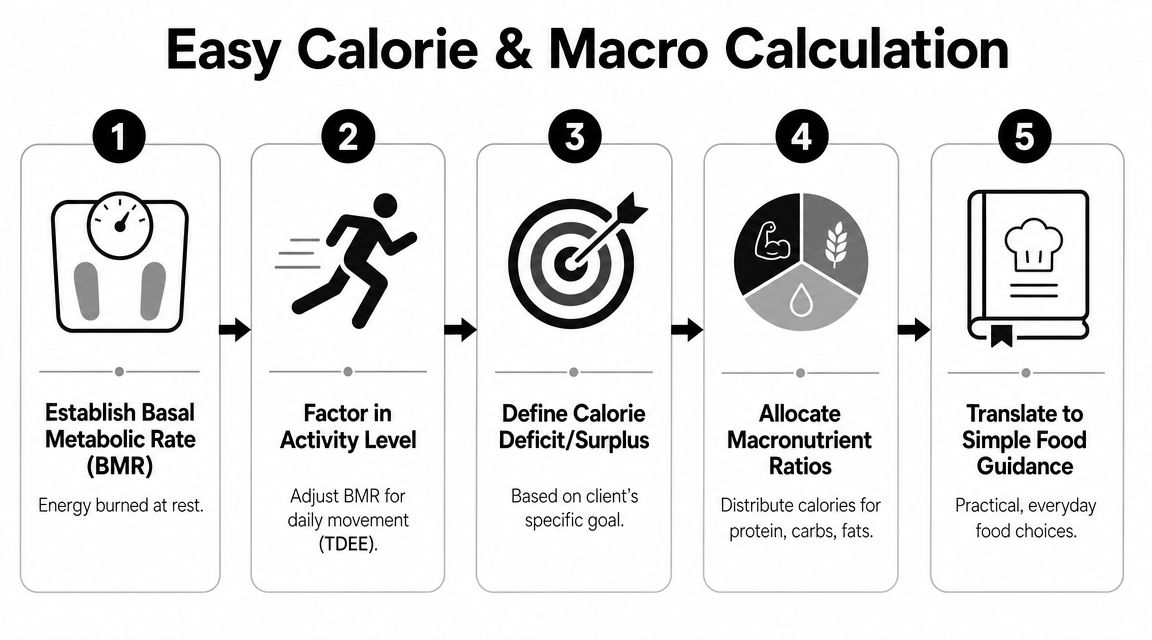
You don't need to act like a lab. Estimate the client's basal metabolic rate, account for activity level, and set a reasonable calorie range that matches the goal.
The key word is reasonable.
For protein, practical trainer guidance often uses 0.8 to 1.2 grams per pound of body weight per day, and 20 to 30 grams of post-workout protein within 30 minutes is often cited as a recovery benchmark, as outlined earlier in the trainer guidance source. Those are useful anchors because they're simple enough to coach and easy to translate into meals.
What matters most at this stage:
Protein gets set first
Calories are aligned with the client's goal and activity
Carbs and fats stay flexible enough to match preference
Nothing is presented as permanent
Build ranges, not prison rules
Clients follow ranges better than razor-thin targets.
Instead of pushing exact numbers as if missing by a small margin is failure, give structure that can survive business trips, family dinners, and low-prep weeks.
Use this kind of language:
Protein goal: hit the daily target as consistently as possible
Calories: stay within a workable range
Carbs and fats: adjust based on preference, training demand, and satiety
Post-workout: include a protein feeding when possible
If you want clients to keep logging, don't make the log feel like a test they keep failing.
Turn math into food decisions
The fastest way to lose a client is to hand over numbers with no translation. Good macro coaching turns those targets into choices they can repeat.
A simple conversion method:
For breakfast, anchor protein first
For lunch, build around one reliable default meal
For dinner, keep the plate structure predictable
For snacks, solve the time slot where they usually drift
For training days, make recovery nutrition automatic
You don't need a seven-day menu. You need a handful of repeatable decisions.
For practical meal-building ideas, these examples of macros are useful because they help turn abstract targets into foods clients recognize from normal life.
Most clients don't break the plan because the numbers were wrong. They break the plan because the numbers never became behavior.
That's why the best personal trainer diet setup keeps the math in the background and the food decisions in the foreground. Adjust weekly based on the client's log, adherence, recovery, hunger, and outcomes. Don't act like the first prescription has to be perfect. It doesn't.
From Rigid Meal Plans to Flexible Habit Coaching
Rigid meal plans look professional on paper. They also fail in the exact places real clients live, work, travel, and eat.
That's why I'd rather see a coach build a strong habit framework than hand over a detailed seven-day menu the client can only follow in a perfect week.
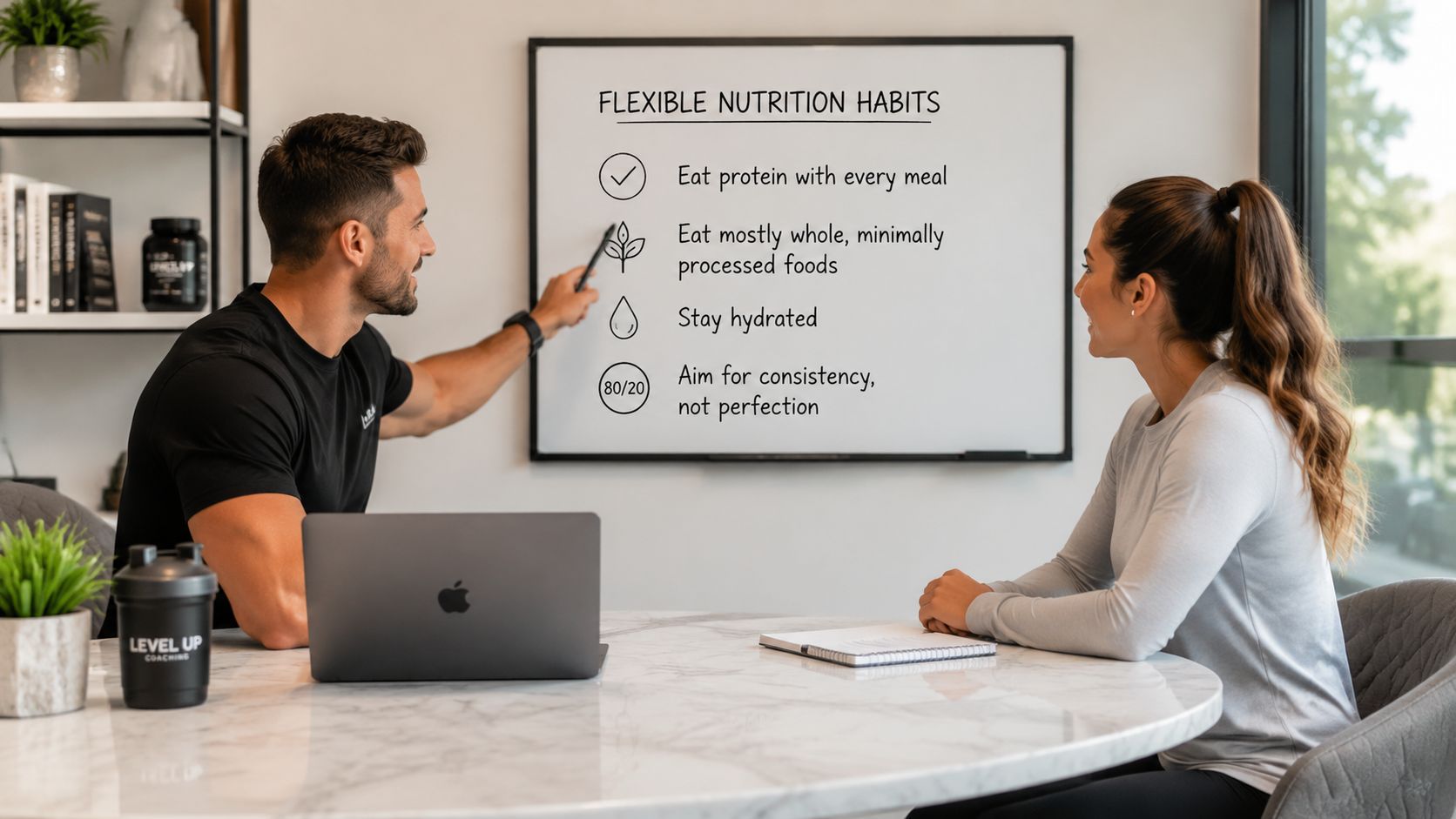
Recent trainer-focused commentary has warned that weight-loss praise and rigid food rules can unintentionally increase dieting behavior and body preoccupation, which is a strong reason to coach nutrition in a way that supports adherence without pushing clients toward perfectionism or guilt, as discussed in this article on trainers and disordered-eating risk.
Why strict meal plans fail good clients
Meal plans create several problems at once.
First, they create dependency. The client starts asking whether they can swap every ingredient because they never learned the principle behind the meal.
Second, they break easily. One missed grocery run, one late meeting, one family dinner, and the whole thing feels ruined.
Third, they can shift your role from coach to food police. That usually lowers honesty in check-ins.
A better model is to coach meal templates and behavior targets. That gives the client structure without removing autonomy.
What to coach instead
Use a habit-first approach built around meals they already eat.
Examples that work well:
Add a protein source to each main meal
Build lunch from a repeatable template
Plan one high-risk eating window instead of trying to control the full day
Keep one easy recovery meal ready for training days
Log consistently, even when the day is messy
You can also use simple templates like:
Meal | Template |
|---|---|
Breakfast | Protein source + fruit or carb source |
Lunch | Protein source + vegetable source + carb source |
Dinner | Protein source + vegetables + flexible carb or fat add-on |
Snack | Protein-first option |
That's enough structure for most general-pop clients.
For coaches building flexible food lists, this macro-friendly food guide is a useful reference point because it gives clients options instead of rules.
Here's a useful explanation to show clients when they start asking for more restriction than they need:
Use language that helps, not language that traps
This part matters more than many trainers realize.
Avoid framing foods as “good,” “bad,” “clean,” or “cheat” foods. Those labels can turn ordinary misses into shame spirals. A client who feels judged by the plan usually either hides what they ate or quits logging altogether.
Try language like this instead:
On-plan meals instead of “clean eating”
Helpful choices for your goal instead of “good foods”
Less filling or less supportive options instead of “bad foods”
Consistency over perfection instead of “you need more discipline”
Good nutrition coaching should increase skill and calm. If it increases guilt, the system is broken.
A strong personal trainer diet service gives clients enough structure to improve, enough flexibility to live normally, and enough psychological safety to stay honest.
Running a Check-in System That Drives Adherence
A nutrition plan without a check-in system is just paperwork.
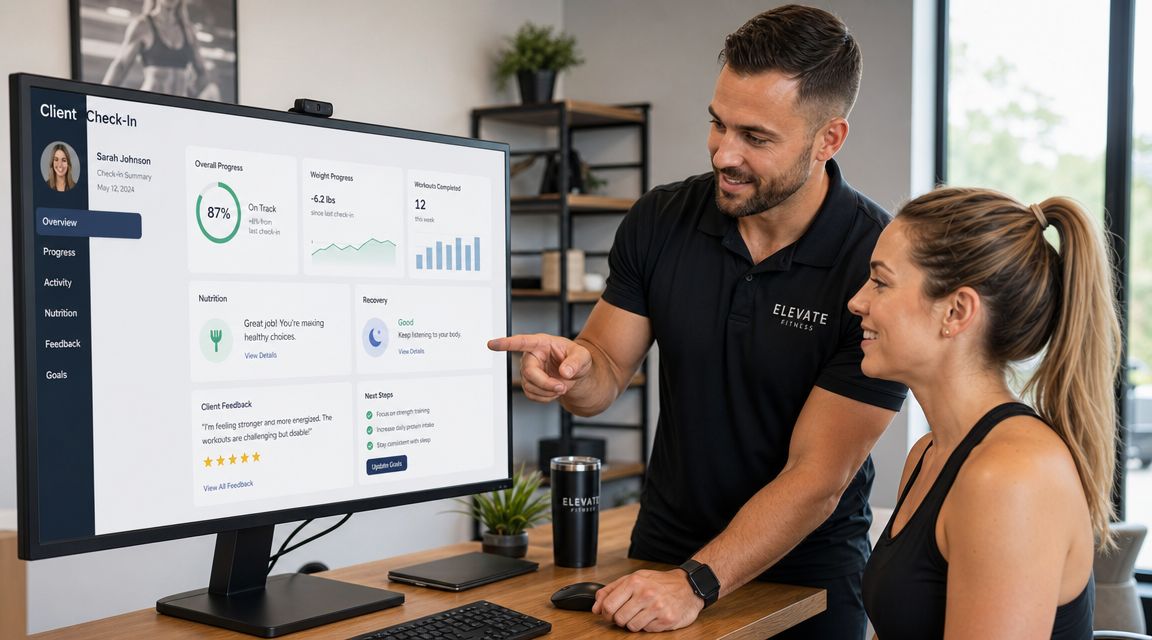
The review loop is where the work happens. That's where you catch compliance drop-off, identify friction, and make the smallest useful adjustment before the client starts telling themselves the plan “isn't working.”
A controlled comparison found that only the personal-trainer group showed a significant fat-mass reduction of -1.61 kg, and that group also showed the strongest tendency to follow the prescribed nutrition plan, according to this study on supervised training and nutrition adherence. That should tell every coach the same thing. Your value isn't just the prescription. It's the follow-up.
What to review every week
Keep the check-in short enough that clients will complete it, but specific enough that you can coach from it.
A strong weekly review includes:
Food log consistency Not whether every day was perfect. Whether enough data exists to coach from.
Adherence to the main habit If the target was protein at breakfast, did that happen?
Hunger, energy, and recovery These tell you whether the plan is livable.
Training performance If lifts, effort, or session quality are falling, nutrition may be part of the issue.
Body comp indicators Use photos, measurements, and trends appropriately. Don't let one noisy data point drive a full rewrite.
How to coach the log without becoming food police
Review patterns, not isolated “bad” meals.
If a client had one off-plan dinner but nailed the rest of the week, that's not the coaching priority. If they under-eat all day and then overeat at night four times in a week, that is.
Use this sequence:
Acknowledge what they did well
Name the main bottleneck
Adjust one thing
Set the next review point
That keeps the process stable. Clients don't need a new nutrition philosophy every Monday.
A lot of coaches also need a better place to house that workflow. If you're still juggling forms, notes, and nutrition data in separate tools, this overview of a nutrition tracking app for coaches is worth looking at for ideas on how to tighten the process.
Why the workflow matters more than the app
Software doesn't coach people. Coaches do.
But your workflow determines whether your coaching can scale beyond a handful of clients. If every check-in requires hunting through text threads, screenshots, and separate notes, the quality of your feedback drops as your roster grows.
Many platforms fail to retain trainers. Prices creep up, bugs sit there for months, and feedback disappears into a form no one answers. Coaches need the opposite. Clean client records. Fast check-in review. Messaging tied to nutrition and progress history. Reliability.
That's also why it matters that FitCentral was co-founded by David Spitdowski, a practicing personal trainer. The product logic reflects what coaches do during check-ins because it was shaped by someone who still runs those conversations with real clients.
A check-in system should make it hard for a client to slip through the cracks and easy for you to spot what matters.
That's what drives adherence. Not louder motivation. Better review.
Staying in Your Lane Scope of Practice and Red Flags
A professional personal trainer diet service needs boundaries. Clear ones.
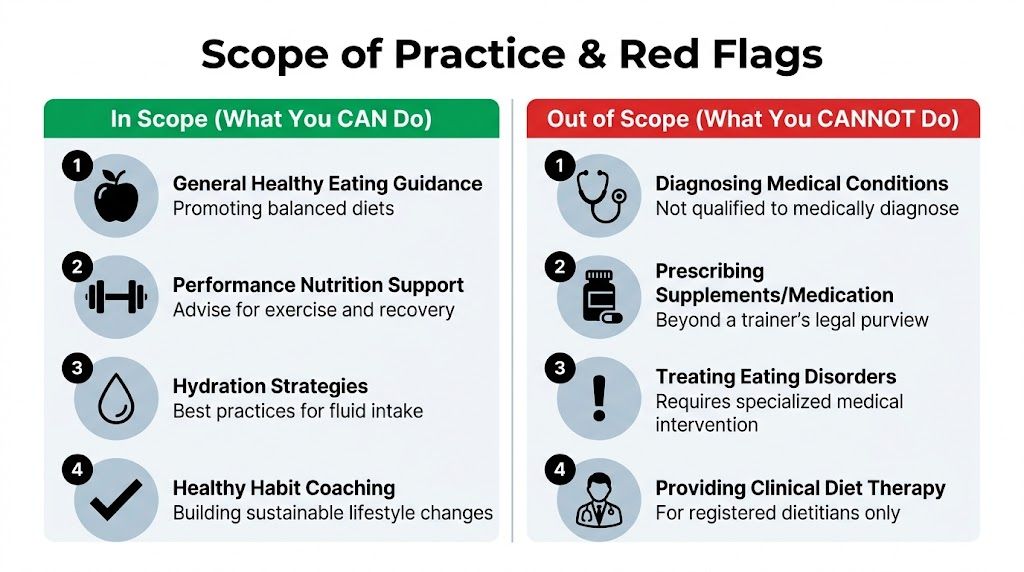
This isn't just about legal risk. It's about client safety, trust, and long-term reputation. Trainers generally operate within a limited nutrition scope, offering basic nutrition tips and practical guidance rather than medical nutrition therapy, and many coaches use the 80 percent rule because meaningful progress is often possible when about 80 percent of meals are on point, according to this breakdown of trainer nutrition assessment and scope.
What stays in scope
You can coach general nutrition behaviors confidently.
That usually includes:
Balanced meal education Teaching clients how to build more consistent meals around protein, vegetables, carbs, fats, and hydration.
Performance support Helping clients think through meal timing around training and general recovery habits.
Food log review Looking at patterns, adherence, and routine breakdowns.
Habit coaching Setting SMART goals such as increasing vegetables to three servings per day within two weeks, as covered in the cited scope guidance.
General calorie and macro ranges Within your role, for non-clinical goals and without presenting your advice as medical treatment.
What needs a referral
Here's where newer coaches often get into trouble. If the conversation shifts from general guidance into diagnosis, treatment, or medical nutrition strategy, you need to refer out.
Red flags include:
Client issue | Your role |
|---|---|
Eating appears compulsive, highly restrictive, or emotionally loaded | Pause nutrition coaching and refer appropriately |
Client wants food advice tied to a diagnosed condition | Refer to an RD or qualified medical professional |
Client asks for treatment-style supplement guidance | Stay out of it |
Client reports fear foods, purging, chronic under-eating, or severe guilt around meals | Refer out immediately |
Client wants a therapeutic diet protocol | Out of scope unless separately qualified |
If you're not sure where your role begins and ends professionally, these personal trainer requirements are a useful practical reference for thinking through credentials, boundaries, and service design.
A clean referral script
You don't need to make referrals awkward.
Use language like:
“I can help you with general eating habits, consistency, and nutrition behaviors that support your training. What you're describing needs someone with deeper nutrition or medical expertise, and I want to make sure you get the right support.”
That protects the client and it protects you.
A few extra rules keep your service clean:
Don't treat medical conditions with food advice
Don't promise results from a personalized diet prescription if that's outside your credentials
Don't keep pushing when a client needs specialist care
Do document what you advised, what the client reported, and when you referred out
The strongest coaches aren't the ones who try to answer every nutrition question. They're the ones who know exactly where their value is, and where someone else should step in.
Your 24-Hour Action Plan
If your personal trainer diet process is still mostly texts, memory, and good intentions, fix one layer at a time.
In the next 24 hours, do this:
Build a nutrition intake form Include food diary review, activity level, allergies, eating patterns, and goal type.
Pick one current client Use them as your pilot case for a cleaner nutrition workflow this week.
Replace one vague goal with one trackable habit Example, protein at breakfast or a planned afternoon snack.
Create a weekly check-in template Ask about adherence, energy, hunger, recovery, and one main obstacle.
Write your scope statement Keep it short and client-facing so expectations are clear from day one.
Draft one referral script Don't wait until a red-flag conversation catches you flat-footed.
Consolidate your client notes Stop storing nutrition data across random tools where details get lost.
A good system doesn't need to be complicated. It needs to be repeatable.
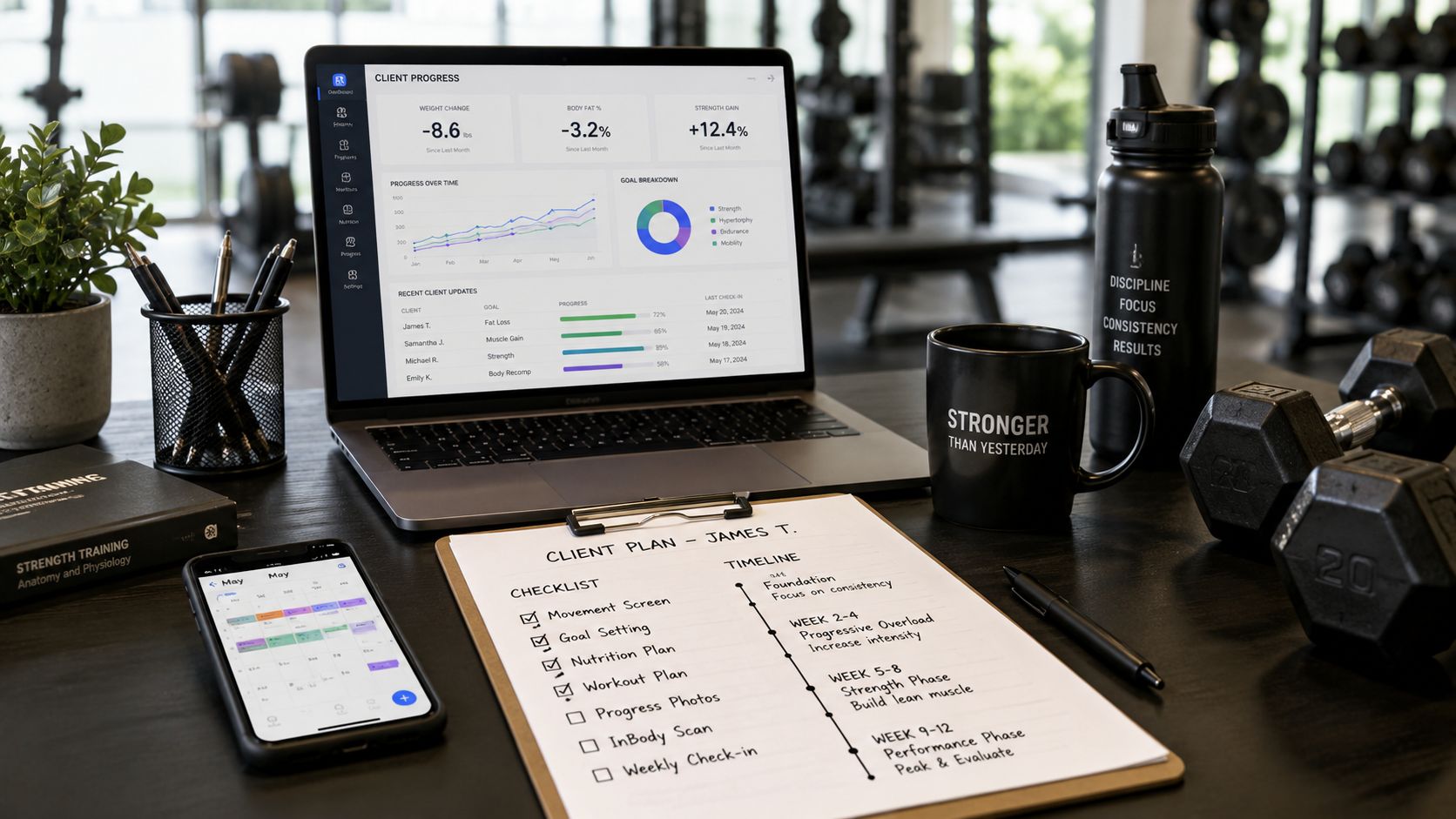
If you want a cleaner way to run intake, nutrition logging, check-ins, habits, notes, and progress tracking in one place, take a look at FitCentral. It was built for working coaches by a working coach, and it fits the exact workflow this article covered without forcing you back into spreadsheets, buggy apps, and disconnected client records.
See also



Ready to stop fighting your software?
FitCentral gives you everything you need to manage clients, deliver results, and grow your business. Sign up today.