Personal Trainer Certified Jobs: A 2026 Playbook

If you're looking at personal trainer certified jobs as the answer, start with the number that matters. One industry analysis says approximately 80% of personal trainers do not make it past the two-year mark, even while the U.S. Bureau of Labor Statistics projected 14% job growth from 2022 to 2032 for fitness trainers and instructors, as noted by Create Fitness in its review of trainer success rates. That tells you the problem isn't whether jobs exist. It's whether you can stay in the job long enough to build stable income.
That gap is where most advice fails. It tells you how to pass a cert, apply to a gym, and maybe post on social media. It doesn't tell you how to manage a book of clients, protect your schedule, handle follow-up, or stop admin from eating the hours you should be coaching. In real life, your certification gets you in the door. Your systems keep you in business.
Table of Contents
The Real Challenge Is Longevity Not Certification
Most new trainers think the hard part is getting certified. It isn't. The hard part is still being here two years later with a full roster, clean systems, and enough control over your schedule that you don't resent the work.
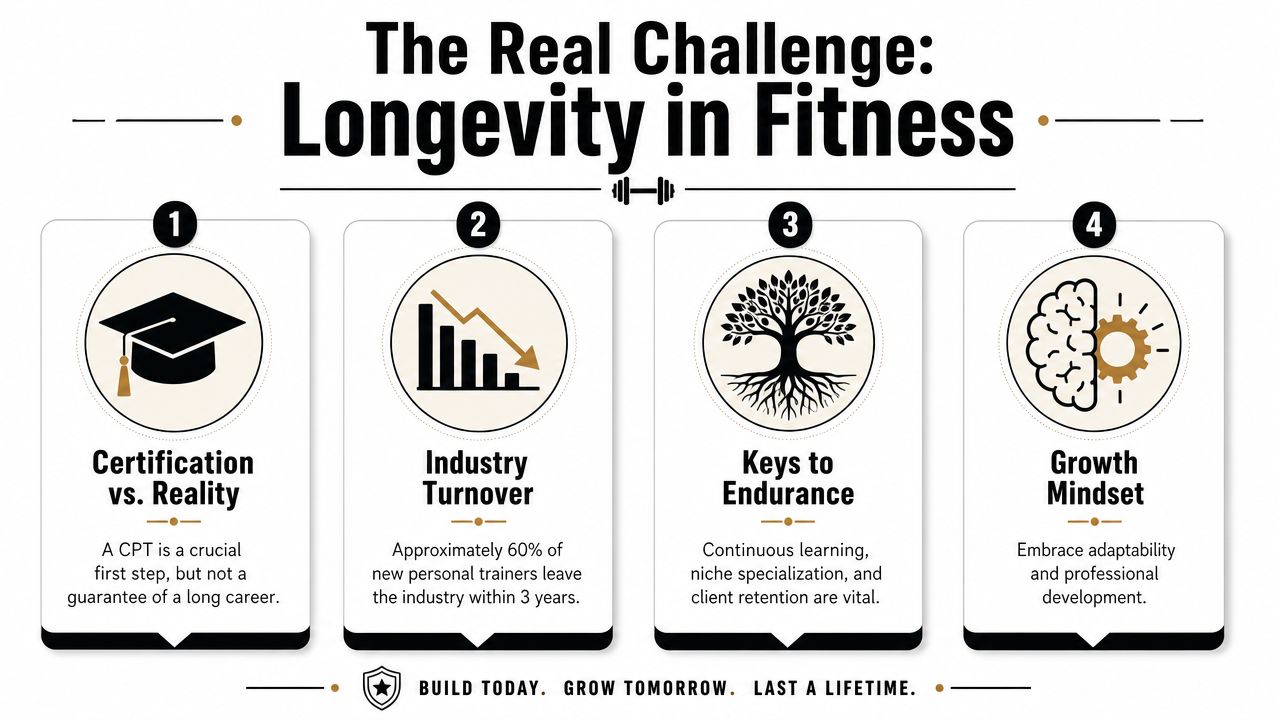
A cert proves baseline competence. It does not fix erratic lead flow, late cancellations, weak consults, or the trainer habit of saying yes to every client even when the fit is bad. That mismatch is why so many coaches burn out early. They know programming. They don't yet know how to run the week.
Why trainers really leave
The usual cause isn't lack of fitness knowledge. It's operational chaos.
Income swings week to week, because sessions drop and nothing replaces them
Client communication lives everywhere, usually in texts, notes apps, and DMs
Scheduling gets messy, especially when mornings, evenings, and weekends all blur together
Positioning stays generic, so prospects compare you on price instead of fit
Follow-up is inconsistent, which kills both conversions and retention
Practical rule: If your business depends on memory, it will break under volume.
A lot of trainers chase personal trainer certified jobs thinking employment alone will solve this. Sometimes it helps. Often it just hides the problem for a while. Even in a gym, the trainers who last are the ones who run simple repeatable processes, onboarding, session prep, check-ins, rebooking, and renewal conversations.
What longevity actually looks like
A sustainable career usually has a few traits:
A clear client type you serve well
A repeatable weekly workflow for programming, check-ins, and session delivery
A retention plan, not just an acquisition plan
Boundaries around schedule, so your book doesn't own your life
If you're still sorting out the baseline credentials and expectations, this breakdown of personal trainer requirements is useful. But once the certification box is checked, the conversation has to shift from access to durability.
Nail the Foundations Beyond Your CPT
Certification is often a minimum requirement for most gyms, and successful trainers usually add a niche or secondary credential. It also typically takes about 3 to 6 months to complete a CPT depending on background and exam difficulty, according to ISSA's guide on starting a personal training career. Use that window to build your positioning, not just your study notes.
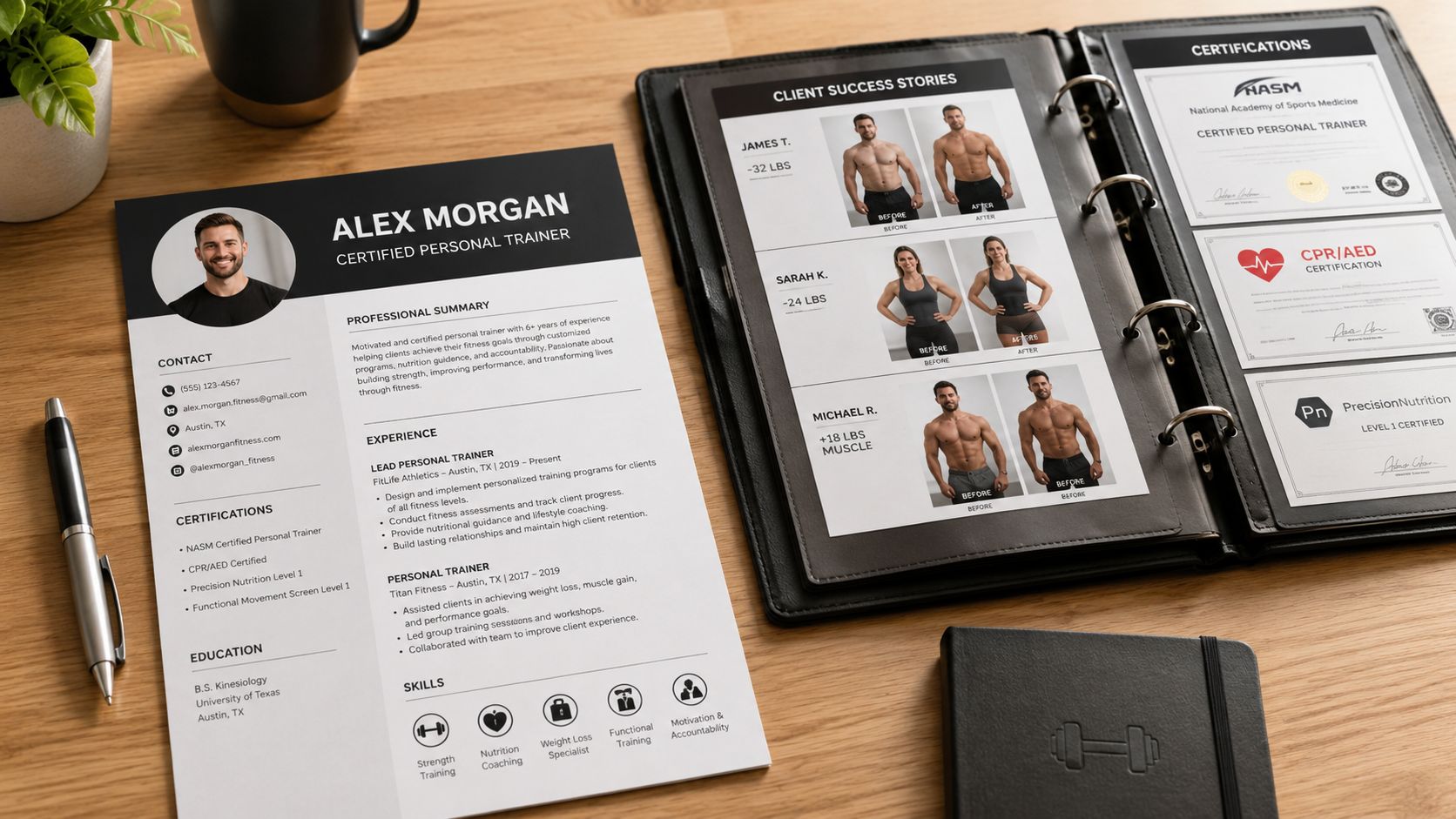
A weak trainer resume reads like a course completion record. A strong one shows that you can solve a specific problem for a specific client type.
Build a portfolio, not just a resume
If you're applying for personal trainer certified jobs, give hiring managers proof that you can coach, communicate, and retain. That proof does not need to be flashy.
Include:
One-page resume with a target market
Instead of "Certified Personal Trainer passionate about health and fitness," write the kind of work you want. Example: "CPT focused on strength and fat-loss coaching for busy professionals who need structured programming and accountability."Two or three client snapshots
Keep these simple and qualitative if you don't have permission to share detailed data. Show starting point, key obstacle, your coaching approach, and what changed in adherence, confidence, movement quality, or routine consistency.A sample program block
A clean 4-week progression says more than a paragraph of adjectives. Show exercise selection, regressions, progressions, and how you handle missed sessions.Your coaching process
Spell out consult, assessment, first month structure, communication rhythm, and how you review progress.
Hiring managers aren't just asking, "Can this person train?" They're asking, "Can this person keep clients engaged without creating problems for the team?"
Pick a niche early, even if you refine it later
Generalist is fine for learning. It is weak for marketing.
The fastest way to stand out is to choose a lane where your message gets sharper. That doesn't mean boxing yourself in forever. It means giving prospects and employers a reason to remember you now.
Good niche examples:
Parents returning to training
Men over 40 rebuilding strength
Women who want strength training without fitness culture nonsense
Beginners who need confidence and structure
Hybrid clients who need both in-person sessions and remote accountability
Tailor your application to the setting
Different employers want different proof. Use the same base material, but change the emphasis.
Setting | What they care about most | What to highlight |
|---|---|---|
Commercial gym | Sales comfort, floor presence, retention | Consult flow, availability, communication, starter offers |
Private studio | Coaching quality, professionalism, fit | Client experience, niche clarity, assessment quality |
Online coaching role | Systems, writing, follow-up | Program delivery, check-ins, documentation, async support |
Clean up your online presence
A hiring manager will look you up. Make that easy.
Your online presence should include:
A clear headline that says who you help
A short bio with certification and niche
A simple offer like 1:1, small group, or hybrid
One proof element such as a client testimonial or sample framework
A contact path that doesn't make people work for it
If you're unsure what education employers expect beyond the cert itself, this guide on education required for a personal trainer gives useful context.
The Modern Job Hunt Where to Actually Apply
The Bureau of Labor Statistics projects about 74,200 openings per year for fitness trainers and instructors on average over the decade, and reports a median annual wage of $46,180 in May 2024. The same BLS page also notes variable and part-time schedules that often include nights, weekends, and holidays, which is why stable income depends so heavily on how well you manage a full client book through the BLS occupational outlook for fitness trainers and instructors.
That means the best personal trainer certified jobs aren't just the ones with openings. They're the ones where the pay structure, lead flow, and schedule reality match the way you want to work.
Stop relying on giant job boards alone
Mass job boards are fine for awareness. They're weak as a full strategy. Too many listings are vague, outdated, or written by someone who doesn't understand the actual trainer role.
Better channels usually look like this:
Direct outreach to gyms and studios
Especially good if you already know the market and can speak to their client type.Local relationship-building
Owners often remember the trainer who visited, introduced themselves well, and followed up professionally.Online coaching marketplaces and remote roles
Useful if your communication, programming, and check-in systems are already strong.Corporate wellness prospecting
A strong option if you're organized, good in groups, and comfortable with reporting and admin.Referral partnerships
Physical therapists, massage therapists, dietitians, and sport coaches can be better lead sources than another round of cold applications.
Comparison of personal trainer job environments
Job Type | Typical Income Structure | Client Acquisition | Autonomy Level |
|---|---|---|---|
Big box gym | Hourly, session pay, commission, or a mix | Shared with the gym, but usually still partly on you | Low to moderate |
Private studio | Session pay, split, or salary-plus-performance model | Often warmer leads, but depends on studio systems | Moderate |
Online coaching | Monthly recurring packages or program-based pricing | Mostly on you unless platform-supplied | High |
Corporate wellness | Contract, salary, or project-based | Usually employer-driven once contract is won | Moderate |
Freelance or independent | Fully self-set pricing | Fully on you | High |
No job type is automatically better. The wrong one can trap you fast.
How to choose the right lane
Use these filters before you apply.
Follow the lead source
Ask where clients come from. If the answer is fuzzy, your paycheck will probably be fuzzy too.
Strong signs:
Defined consult process
Clear handoff from front desk, sales team, or manager
Existing member base that already buys training
Referral expectations spelled out up front
Weak signs:
"You'll build your book from the floor"
"Our top trainers do well if they hustle"
No clear process for no-shows or expired packages
No retention system beyond trainer effort
Check the admin load
A lot of roles sound like coaching jobs until you start. Then half the week is reschedules, notes, renewals, and chasing payments.
If a role pays on sessions but quietly expects unpaid admin around those sessions, your real hourly value drops fast.
Match the role to your stage
Some environments are better early. Some are better once you've built confidence and systems.
Need reps fast? A commercial gym can sharpen consults and in-person coaching quickly.
Need stronger mentoring and higher-touch clients? Private studios often help.
Already comfortable selling and writing programs? Online or hybrid can work well.
Want predictable daytime blocks? Corporate wellness is worth exploring.
If you're building your own lead engine alongside applications, a simple website for a personal trainer makes your outreach much more credible.
How to Win the Interview and Negotiate Your Worth
Interviews for personal trainer certified jobs are rarely about exercise knowledge alone. Most hiring managers assume a certified trainer can coach the basics. They're trying to figure out whether you can convert interest into paying clients, deliver a solid session, and stay organized enough that members don't slip through the cracks.
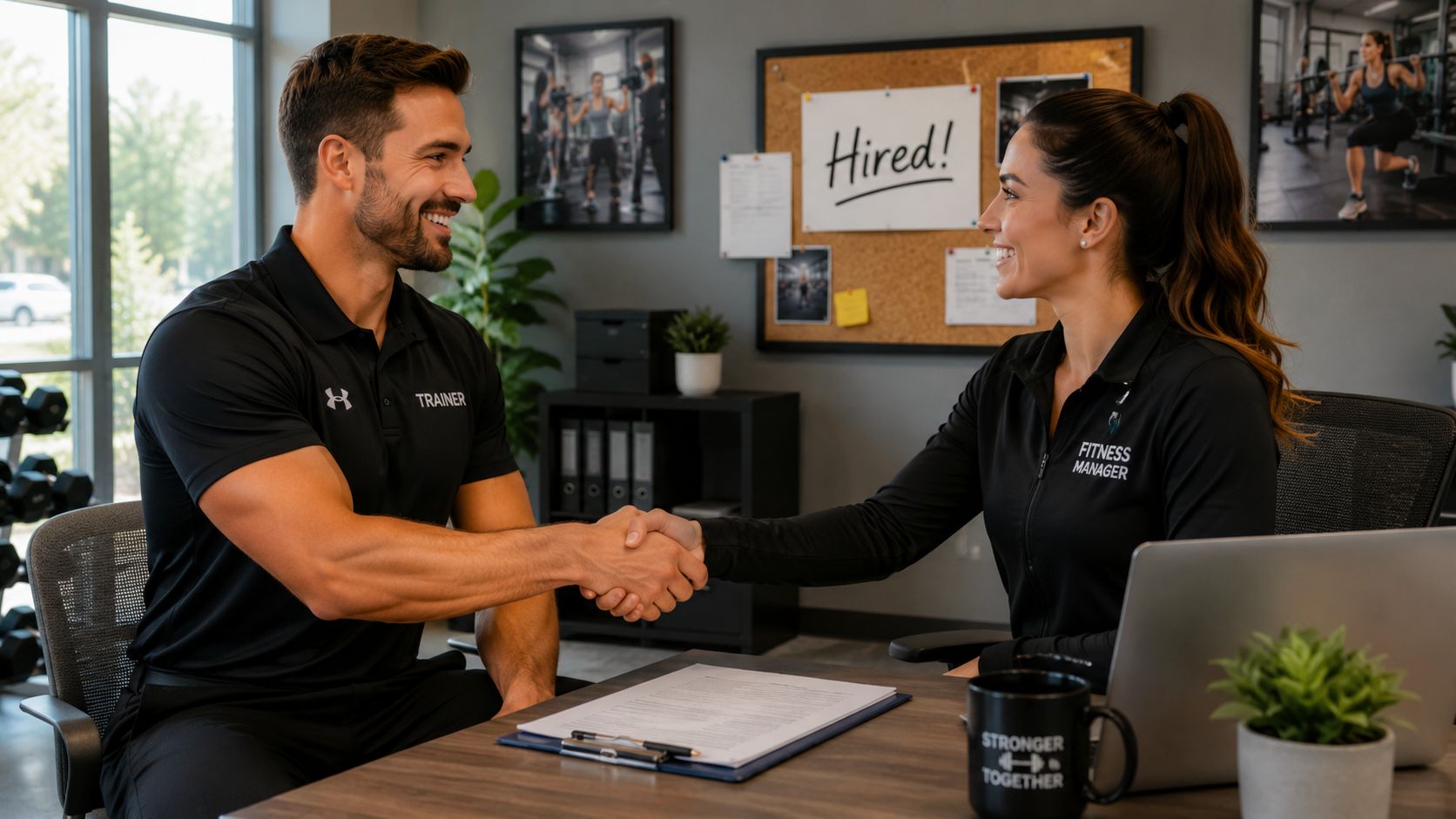
Independent career content also points out that many job postings emphasize sales and commissions, which tells you earnings are tied to acquisition and retention, not certification alone, as discussed in Gymkee's overview of jobs with a personal trainer certification.
Win the practical before you worry about the paycheck
Your demo session should show more than exercise selection. It should show judgment.
Hiring managers notice whether you:
Coach clearly instead of dumping terminology on the client
Adjust on the fly when movement quality isn't there
Keep the pace moving without rushing
Build confidence instead of trying to impress
Close the session cleanly with a next step
A practical demo is part coaching test and part retention test. Can a client imagine coming back to you next week?
Ask better questions than the average applicant
Most trainers ask about hourly pay first. Fair question, but it misses the bigger money issue. Ask about the pipeline.
Use questions like these:
How are new training leads generated and assigned?
What percentage of a trainer's schedule is usually floor time versus paid sessions?
Who handles renewals, package follow-up, and lapsed clients?
What's expected around sales, and how is that coached?
Is continuing education supported, and what kinds of trainers tend to last here?
The right interview question doesn't just help you get hired. It helps you avoid taking the wrong job.
Negotiate from business reality
Don't negotiate off ego. Negotiate off workload, lead flow, and role structure.
Important distinctions:
W2 employee
Usually gives you more structure, less freedom, and less control over pricing, but can remove some business admin.1099 contractor
Usually gives you more autonomy and potentially better upside, but more responsibility for taxes, lead generation, and operations.
Before accepting, look at:
Session pay or split
Whether unpaid floor hours are required
Commission expectations
Cancellation policy
Payment timing
Any non-compete or client ownership language
This short video is worth reviewing before a serious interview:
If you need a baseline for thinking through your numbers, this guide on hourly rate for a personal trainer helps frame the conversation.
From Employee to Entrepreneur The Freelance Playbook
A lot of trainers don't stay employees forever. They start in a gym, learn what works, then realize the ultimate opportunity is building a roster they control. That shift can happen slowly, five clients on the side, or quickly after one bad compensation plan too many.
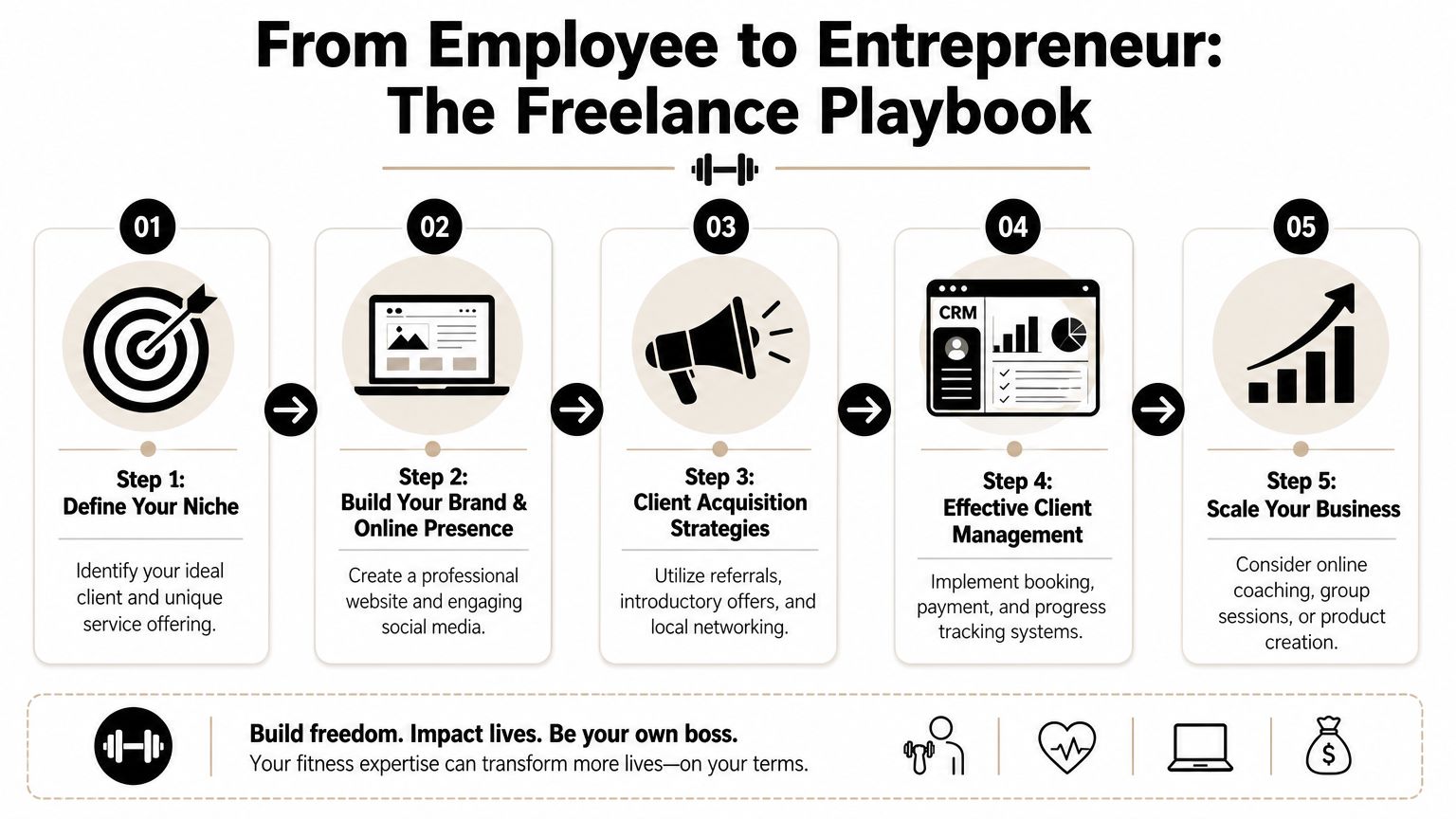
The work itself is changing too. Industry career guidance points toward growth beyond the gym floor into online coaching, corporate wellness, management, and specialized niches, while job listings increasingly expect admin work and documentation, according to NASM's article on career paths for certified personal trainers.
Freelance breaks when your systems are weak
The first few clients are easy to manage in your head. The next batch exposes every hole.
You start noticing it when:
one client pays late
another reschedules twice
check-ins come through three different apps
progress photos are buried in a camera roll
you rewrite the same onboarding message every week
That's when trainers either tighten up operations or stall out.
Build the roster in this order
First, define the offer
Don't sell "training." Sell a clear service for a clear person.
Examples:
in-person strength coaching for busy professionals
hybrid coaching for parents who can train three days a week
remote fat-loss coaching with weekly accountability
mobility and strength support for desk-bound adults
Then, standardize delivery
Before you add more clients, decide:
how assessments work
what your first month includes
when check-ins happen
where programming lives
how clients book
how payments recur
how you track adherence and progress
Then, protect your time
Freelance trainers lose a lot of margin by being too available.
Set:
office hours for replies
fixed check-in days
cancellation boundaries
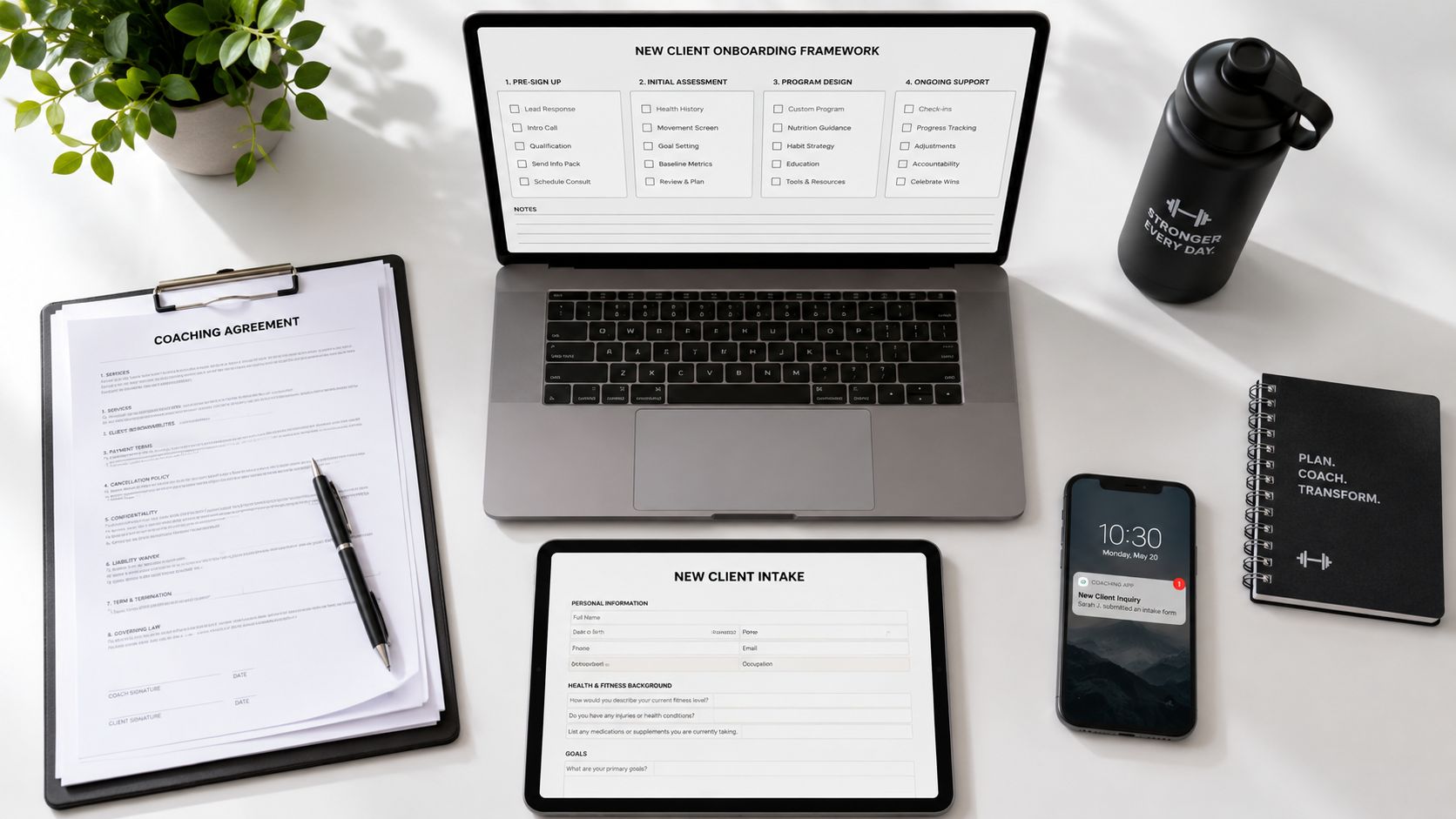
onboarding steps that every client follows
Coaches don't burn out because they care too much. They burn out because every client gets a custom process.
Use tools that reduce admin, not add another tab
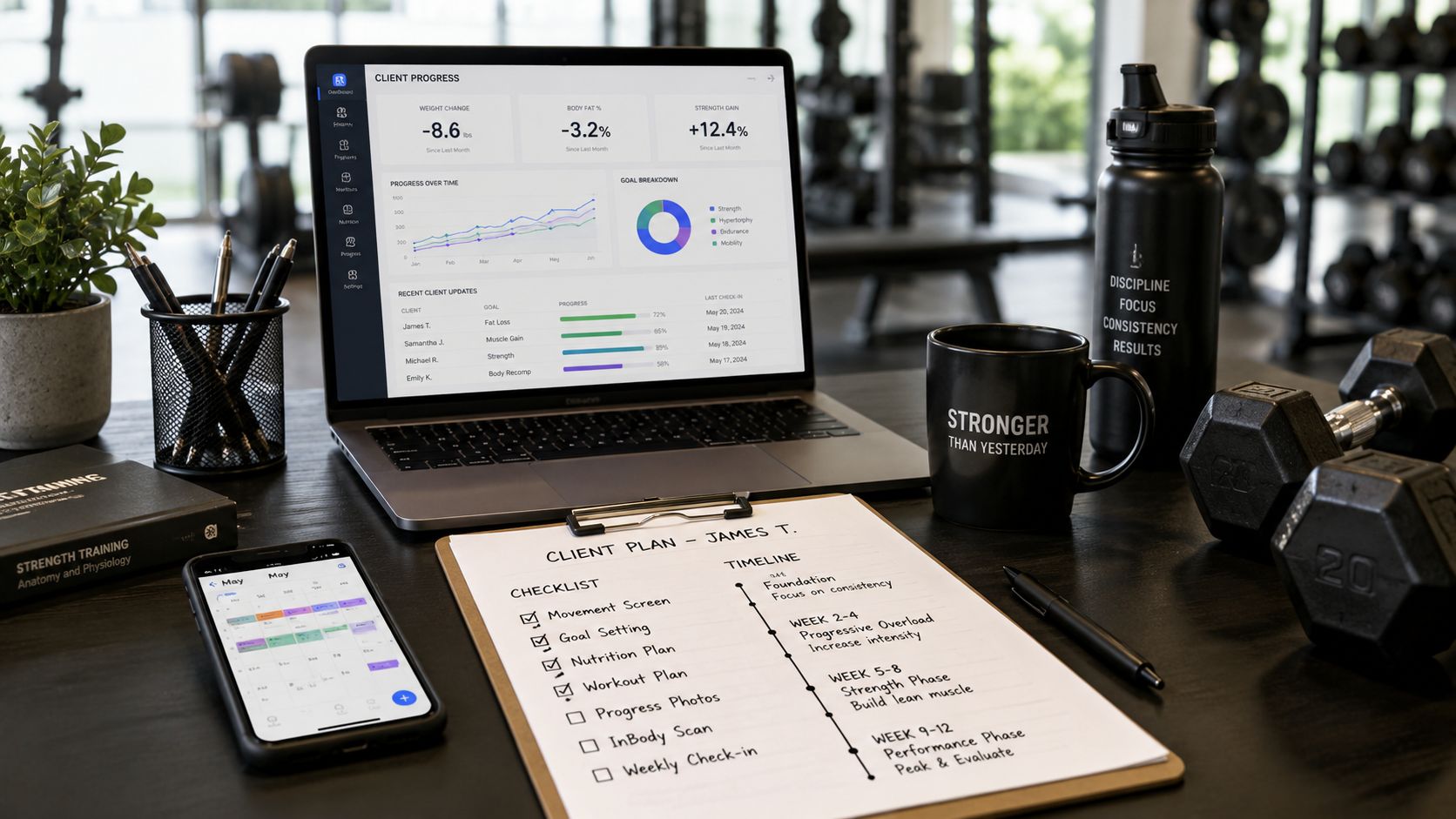
At some point, spreadsheets, calendar links, invoices, notes apps, and text threads stop being "scrappy" and start costing you money. A dedicated client management system makes more sense once your roster and service stack get more complex.
One option is FitCentral, which was co-founded by David Spitdowski, a practicing personal trainer. It handles programming, scheduling, messaging, progress tracking, nutrition logging, habit tracking, and payments in one place. For coaches building an independent roster, that matters because recurring admin is usually what limits growth first, not programming skill.
If you're considering in-home or hybrid work as part of that shift, this guide to personal training at home can help you think through setup and delivery.
A simple transition model that actually works
The cleanest move from employee to entrepreneur usually looks like this:
Stage | Main focus | Common mistake |
|---|---|---|
Early employee phase | Coaching reps and sales reps | Waiting too long to define a niche |
Side-roster phase | Building a small reliable client base | Using scattered tools and loose boundaries |
Hybrid phase | Smoother systems and recurring revenue | Overcommitting across too many service types |
Independent phase | Retention and referrals | Chasing scale before operations are stable |
You don't need a huge audience. You need a clear offer, reliable delivery, and clients who stay.
Your Next Move in the Next 24 Hours
Reading about personal trainer certified jobs doesn't change much by itself. A tighter system does. You can make that shift this week.
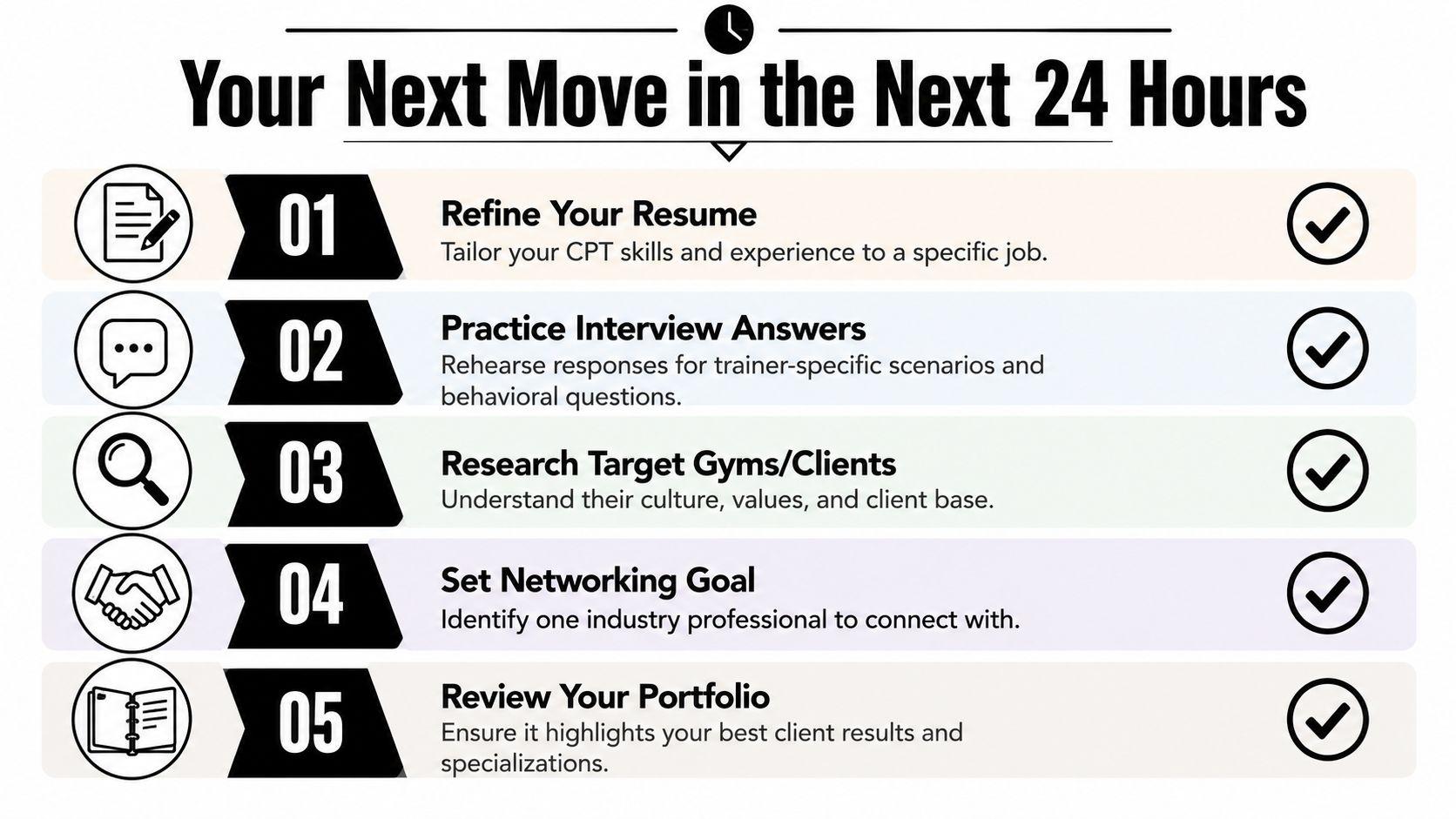
Do these five things today
Rewrite your resume headline
Make it niche-specific and client-facing. Cut generic phrases like "passionate fitness professional."Build one proof asset
Put together a one-page case snapshot or a sample 4-week program for your ideal client.Make a target list of five employers or client channels
Include studios, gyms, corporate leads, referral partners, or online roles. Don't keep it vague.Write your interview questions now
Especially around lead assignment, unpaid hours, renewal process, and compensation structure.Audit your current workflow
List where programming, booking, messaging, payments, and progress tracking live right now. If it's scattered, that's the first problem to fix.
The highest-value move
If you only do one thing in the next 24 hours, do this: document your client journey from first contact to renewal.
Write it out in order:
inquiry
consult
onboarding
first month
check-in rhythm
renewal conversation
Most trainers don't need more motivation. They need fewer loose ends.
Start there, and you'll be in a much better position to land the right role, or build one yourself.
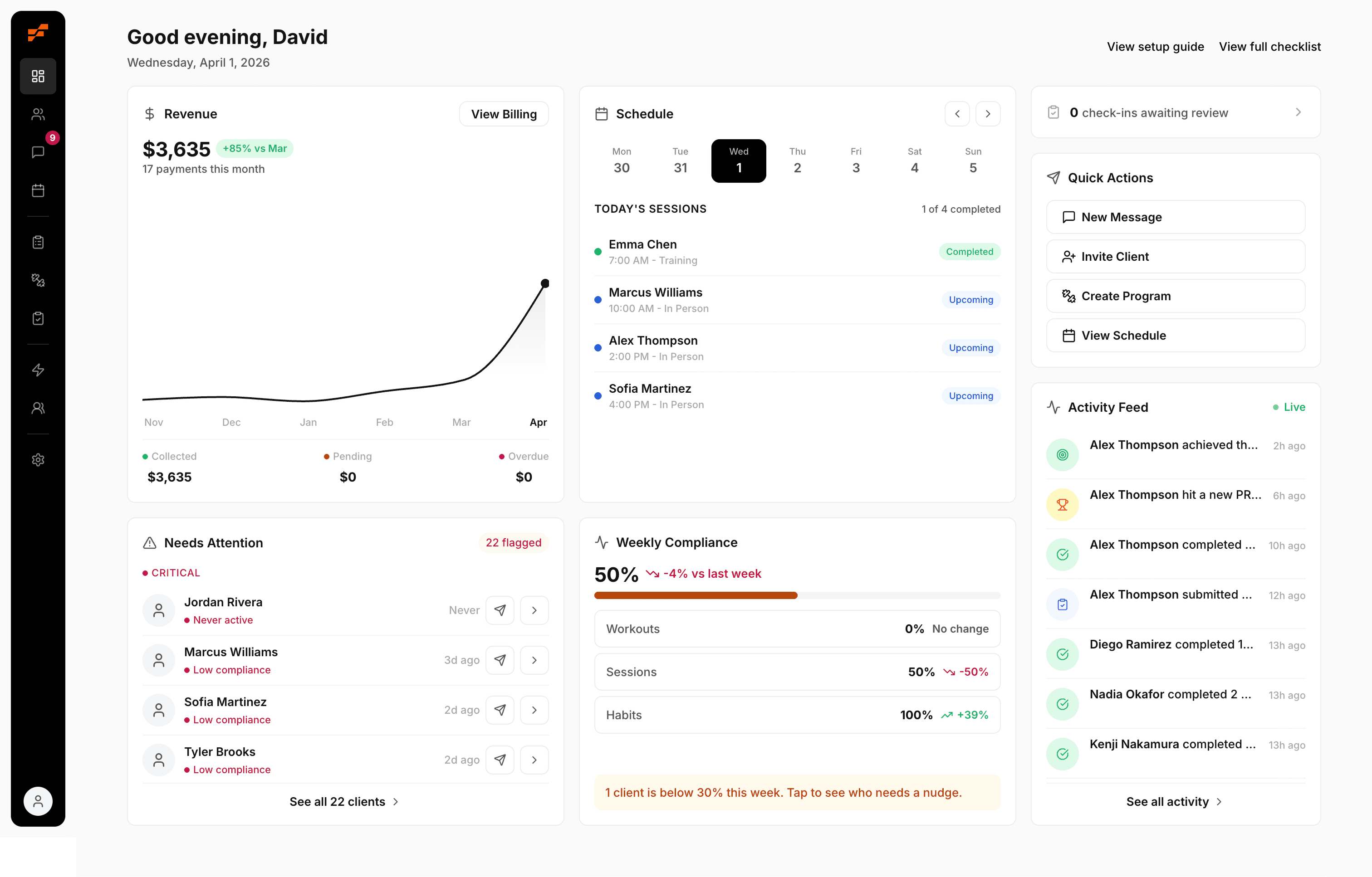
If you're already coaching clients and you're tired of managing programming, scheduling, messages, and payments across disconnected tools, FitCentral is worth a look. It was built for trainers running real client rosters, and it fits the exact problem this article covered: certification opens the door, but reliable systems are what keep your income stable.
See also


Ready to stop fighting your software?
FitCentral gives you everything you need to manage clients, deliver results, and grow your business. Sign up today.