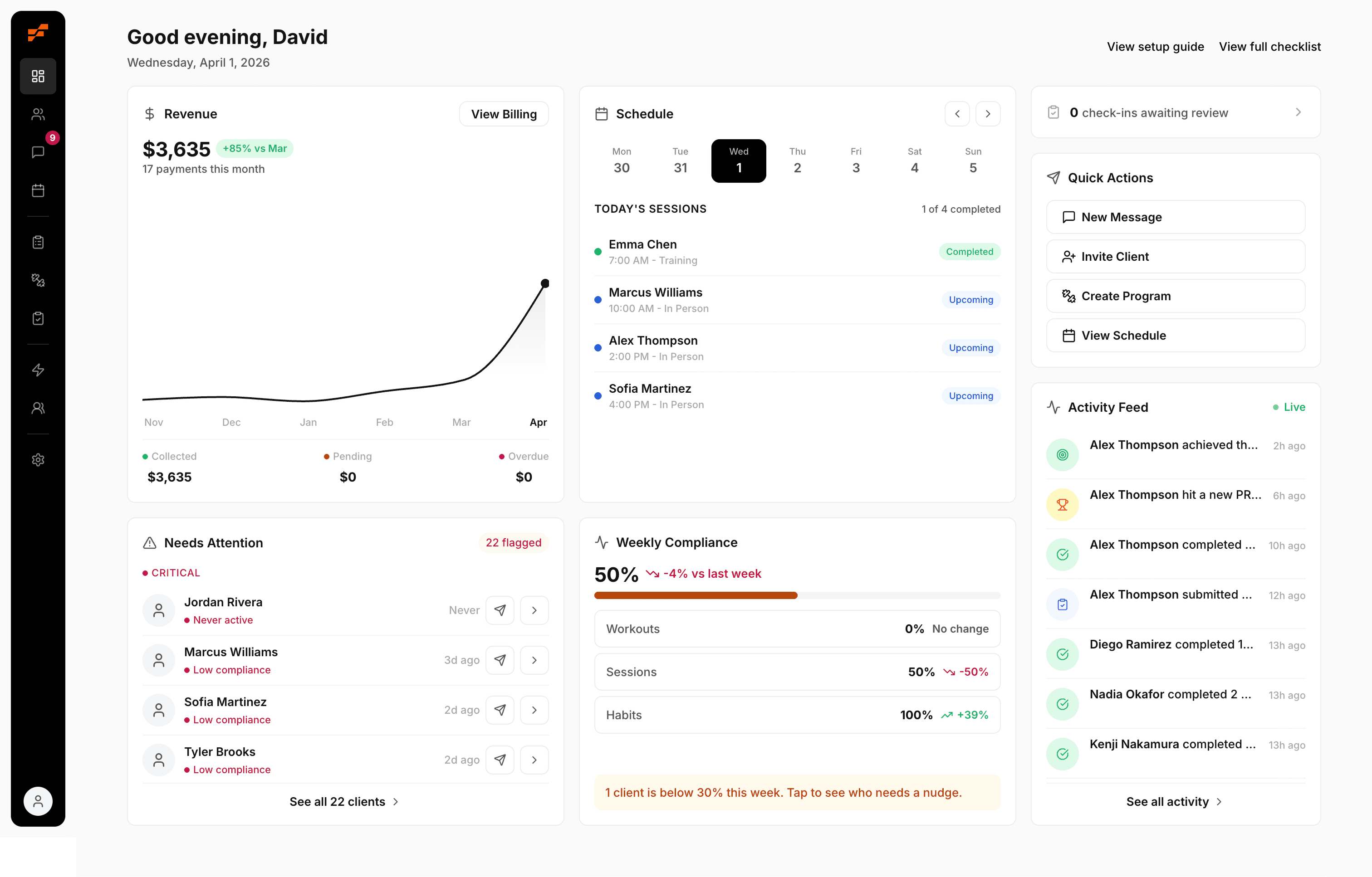
Your PT Business Plan: A No-Fluff Guide for 2026
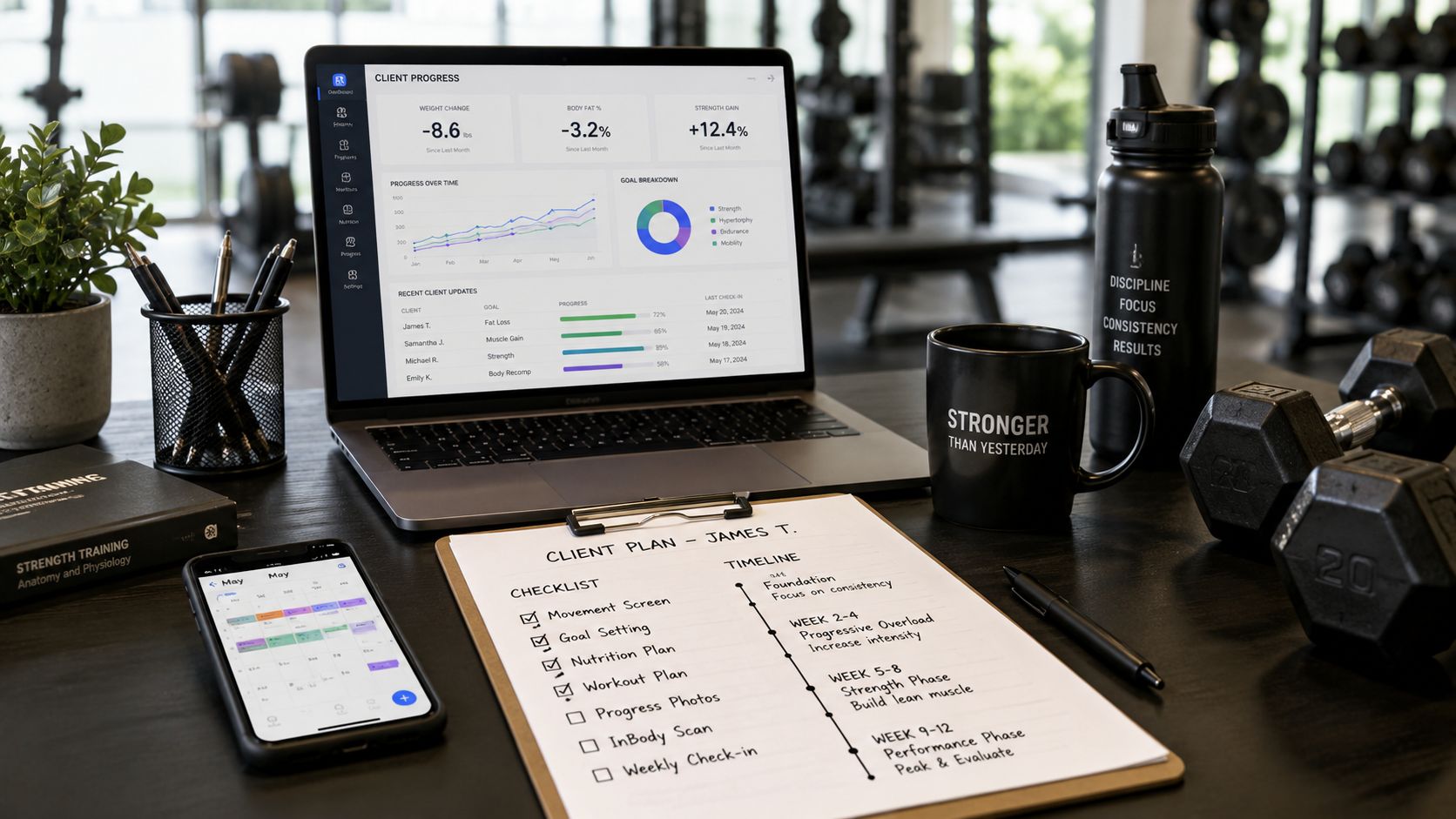
You've probably hit this point already. You've got a decent client roster, money is coming in, and on paper the business looks healthy. But your week still feels messy. Bookings come through DMs, payments need follow-up texts, check-ins are buried in notes apps, and programming lives across spreadsheets that only make sense to you.
That's when most coaches realize they don't need more hustle. They need a PT business plan that runs the business.
Not a bank-loan document. Not a polished PDF you write once and forget. A working plan that tells you who you serve, what you sell, how clients move through your service, what your capacity really is, and whether the numbers hold up when a few clients pause at the same time.
Table of Contents
Your Business Plan Is a Compass Not a Chore
Most coaches treat a PT business plan like admin homework. That's the mistake.
If you're running a solo coaching business, your plan is the thing that tells you where the leaks are. It shows you whether the problem is weak retention, underpricing, poor payment collection, too many manual tasks, or a roster that looks full but isn't profitable.

One published template notes that entrepreneurs who write a business plan are 16% more likely to achieve viability and 30% more likely to experience growth, and for coaches managing 5 to 50 clients the plan becomes a control system instead of guesswork, according to this PT business planning template for trainers.
That matters because chaos doesn't usually show up as one big failure. It shows up as little frictions all week:
Late payments that mess with cash flow
No-show gaps that burn time you can't sell twice
Loose communication spread across text, email, and DMs
Programming drift when each client gets managed in a different place
Capacity confusion where you feel busy but can't say what a full roster is
Practical rule: If your business only works when everything goes right, you don't have a business plan yet. You have momentum.
A useful plan should answer practical questions fast. Who is your best-fit client? Which service creates recurring income? How many active clients can you serve well before quality drops? Where does money get lost? What has to happen each month for the business to stay steady?
That's also why your online presence matters. If your positioning is muddy, the whole plan gets harder to execute. A clear offer page or coaching site like the examples in this guide to personal training at home helps tighten the front end of the business before leads ever speak to you.
Define Your Foundation Who You Serve and Why
A weak foundation makes every later decision harder. Pricing gets fuzzy. Marketing gets random. Content gets generic. Referrals get weaker because clients can't clearly explain what you do.
A strong PT business plan starts with one uncomfortable choice. You cannot serve everyone equally well.
Get specific about the client
NASM frames a practical trainer business plan around four core pieces, including defining the client niche, and notes that many trainers spend 8 to 12 hours on market research alone to get the base right, as described in NASM's personal trainer business plan guide.
That doesn't mean writing a fake avatar with a made-up name. It means identifying the true pattern in the clients you coach best.
Ask yourself:
Who already gets the best results with me?
Whose problems do I understand quickly?
Which clients do I enjoy coaching week after week?
Which type of client refers people like them?
Examples of a sharper niche:
Postpartum women rebuilding strength
Busy professionals who need efficient in-person sessions
Men over forty who want to lose weight without beating up their joints
Beginner runners training for a first race while improving strength
“General fitness” is usually a sign the business hasn't chosen a lane yet.
Define the actual problem you solve
Clients don't buy sessions. They buy relief, progress, confidence, structure, accountability, or a plan they can trust.
Write your positioning in this format:
Piece | What to write |
|---|---|
Client | The group you serve best |
Problem | The result they're struggling to get |
Method | How your coaching solves it |
Reason to choose you | Why your approach fits them better than generic training |
A simple example:
Piece | Example |
|---|---|
Client | Desk workers over forty |
Problem | Chronic stiffness, weight gain, inconsistent training |
Method | Strength coaching with mobility work and realistic weekly planning |
Reason to choose you | You build programs around travel, work stress, and recovery limits |
Your niche doesn't need to be exotic. It needs to be clear enough that the right person says, “That coach gets me.”
Positioning that makes the offer easier to sell
Once the client and problem are clear, your service starts sounding stronger without hype.
Use language tied to the client's reality:
Bad positioning: personalized fitness coaching for all goals
Better positioning: strength and accountability coaching for busy parents who need a plan they can stick to
Better still: hybrid strength coaching for women returning to training after pregnancy, with in-person sessions and simple at-home programming
That kind of clarity changes everything. It tightens your intake calls. It improves referrals. It makes content easier to create because you're speaking to one type of person instead of the internet.
Structure Your Services and Pricing Models
Most coaches don't have an income problem first. They have a packaging problem.
If the only thing you sell is your time, your ceiling arrives early. You fill your week, your admin grows, and every extra client creates more moving parts than revenue stability.

Sell outcomes not scattered time
Here's the shift. Stop listing tasks. Start defining offers.
A client doesn't care that your service includes messaging, plan updates, habit review, and session programming as separate line items. They care that they're supported and progressing. Your pricing model should reflect that.
Common offer structures:
One-to-one coaching
Good for high-touch service, deeper accountability, and premium positioning. Harder to scale if every client gets fully custom everything.Semi-private coaching
Strong option if you coach in person and want better revenue per hour without lowering quality. It works best when the clients share a training style or general goal.Online monthly coaching
Better for recurring revenue and calendar control. Requires clean systems for programming, check-ins, habit adherence, and communication.Hybrid coaching
Often the sweet spot for solo trainers. You keep the relationship strength of live contact and the margin benefits of remote support.
For a more detailed breakdown of what to charge and how coaches think through rates, this guide on the hourly rate for personal trainers is useful as a comparison point.
Choose a pricing model you can manage
The wrong pricing model creates hidden labor. That's what many coaches miss.
Per-session pricing
works when your service is mostly session delivery. It's simple, but revenue can swing around cancellations, travel, and inconsistent booking habits.
Packages
can improve commitment, but they still push the client to think in units of time rather than continuity of coaching.
Monthly recurring coaching
usually fits best when you provide both training delivery and between-session support. It lines up better with retention, progress tracking, and predictable cash flow.
If clients are texting you between sessions, sending form videos, asking for adjustments, and relying on your structure each week, you are already selling more than floor time. Price accordingly.
A useful pricing check is this: if a client took away the in-person hour, would there still be meaningful value in the relationship? If the answer is yes, your offer is coaching, not just sessions.
This short video is a good prompt for thinking about the business side of packaging and pricing:
What usually works better than underpricing
Underpricing feels safe early on. In practice, it usually creates one of three problems:
You need too many clients to make the month work.
You resent the amount of support clients expect.
You avoid improving the service because every added tool feels expensive.
A better model is to build offers around delivery reality. Include the actual support you provide. Define boundaries. Put communication rules in writing. Make the service easy to understand and easy to renew.
Map Your Client Acquisition and Marketing Tactics
Once the offer is clear, marketing gets simpler. Not easy, but simpler.
Most solo coaches don't need more channels. They need fewer channels run well. Trying to post everywhere usually creates weak content, inconsistent follow-up, and a lot of noise with no system behind it.
Own one local channel well
If you coach in person, local search deserves serious attention.
Your first priority is showing up clearly when someone nearby looks for a trainer, not trying to become a creator first. That means tightening your business profile, service descriptions, photos, reviews, and consultation path. Make it obvious what kind of client you work with and what happens next.
Focus on basics that drive action:
Clear service language that matches your niche
Recent photos of your space, setup, or coaching style
A simple contact route to book a consult
Review requests built into your client offboarding or milestone check-ins
Build one content lane
If you coach online or hybrid, choose one platform where your ideal client already pays attention. Then stay in that lane long enough to become recognizable.
Don't post generic workouts for everyone. Post content that screens in the right client and screens out the wrong one.
Examples:
Busy professionals: quick posts on realistic training around travel and work stress
Postpartum clients: education around rebuilding confidence and strength safely
Fat loss clients over forty: content on consistency, recovery, and adherence rather than punishment
If you need ideas on shaping authority content without turning yourself into a full-time creator, this article on fitness influencer marketing gives a useful way to think about visibility.
Turn good clients into a referral engine
Referrals are still the cleanest leads for most coaching businesses. But referrals don't happen because you hope. They happen because the client experience is clear and the ask is timed well.
Use simple prompts:
After a clear win: ask when a client hits a milestone they care about
At review points: bring it up during progress check-ins
At the end of a successful block: ask whether they know anyone dealing with the same issue they had when they started
The best referral message is usually a sentence, not a campaign. “If someone in your circle is dealing with the same thing you were when we started, feel free to connect us.”
Good marketing should feed a business model you can deliver consistently. If leads come in faster than you can onboard them well, marketing isn't the bottleneck anymore.
Design Your Operations and Client Workflow
In this crucial area, most PT business plan templates prove inadequate, and most solo coaching businesses consequently stall.
A complete plan has to detail operations like software, scheduling, payments, and communication policies, because those systems decide whether a trainer can scale without chaos, as noted in Insurance Canopy's guide to personal trainer business plans.
Map the client journey before you add more clients
Write the workflow from first contact to renewal. Don't keep it in your head.
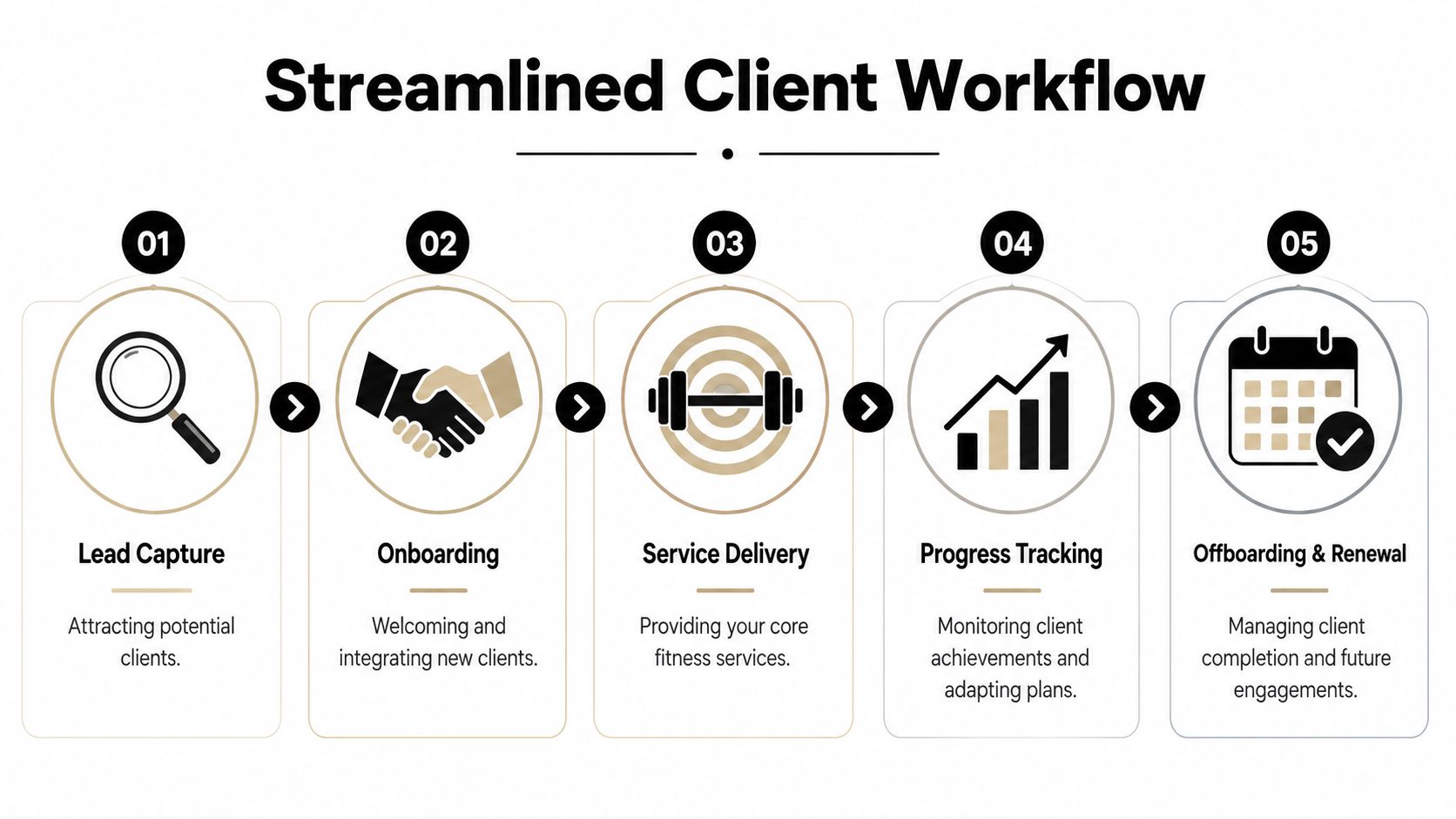
A clean client workflow usually includes:
Lead capture
Where inquiries come in, what information you collect, and how fast you reply.Consult and sales process
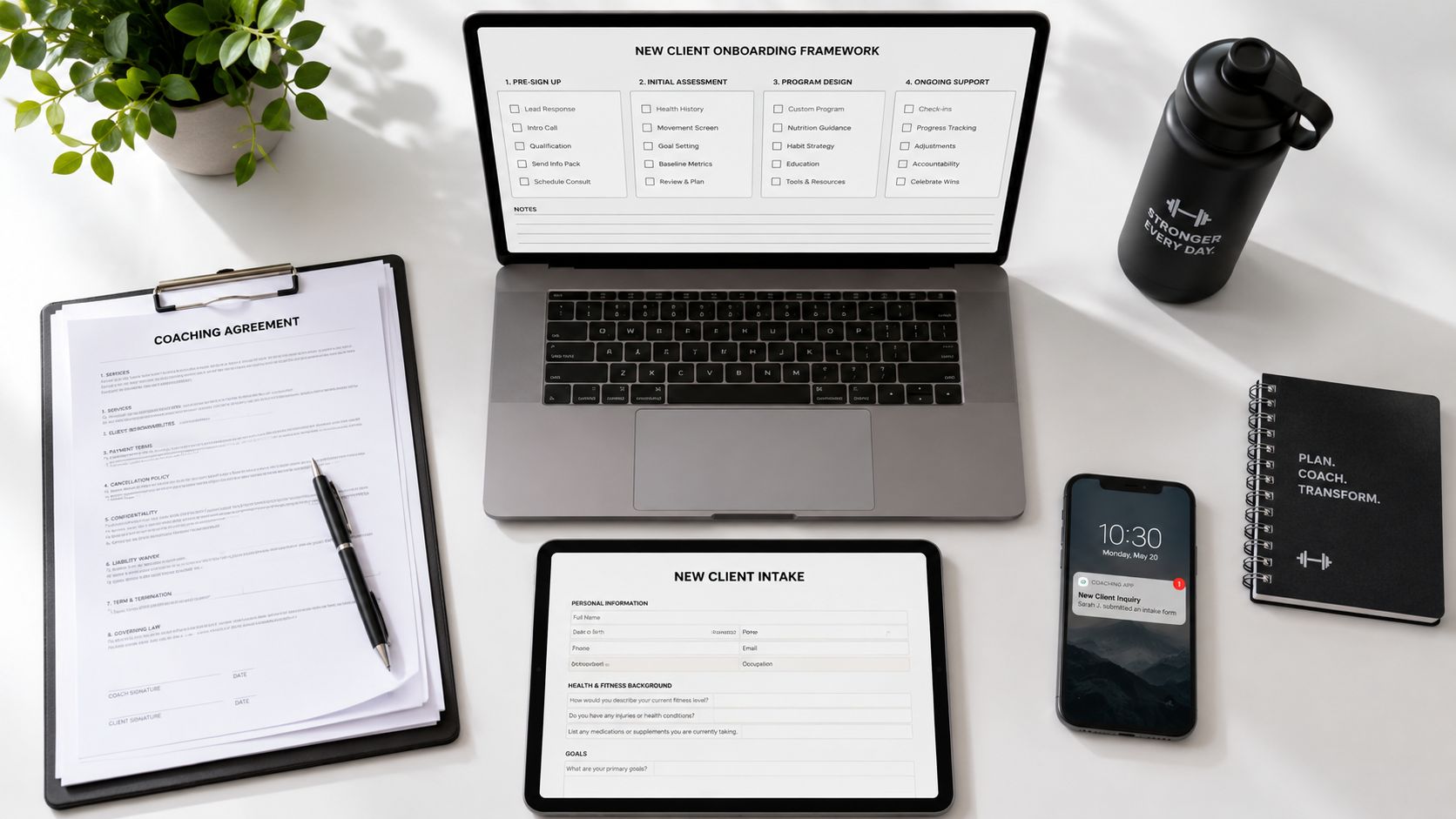
How you qualify fit, explain the offer, and move someone to payment.Onboarding
Waivers, goals, health history, baseline data, scheduling, and platform setup.Service delivery
Training sessions, programming, check-ins, habit coaching, and messaging rules.Review and renewal
Progress review, next-step recommendation, continued coaching, pause, or exit.
Most operational stress comes from unclear handoffs between those stages.
Find the friction that steals coaching time
If you're stuck at around the same roster size, look for repeated friction, not motivation problems.
Common issues:
Workflow area | What goes wrong |
|---|---|
Booking | Sessions handled through text chains and manual reminders |
Payments | Invoices sent late, failed payments chased manually |
Programming | Client plans spread across docs, spreadsheets, and notes |
Check-ins | No standard review rhythm, so updates become reactive |
Messaging | Boundaries unclear, clients message everywhere |
Progress tracking | Wins are hard to show because data is scattered |
Growth often stalls because the coach has built a service that depends on memory and manual follow-up.
That's why the client journey needs system design, not just good intentions. If you want a useful benchmark for tightening the front end, this guide on client onboarding software for coaches helps surface where friction starts.
When a coach says they need more clients, I usually want to see their workflow first. Plenty of businesses don't need more demand. They need cleaner delivery.
Build Your Financial Projections and Cash Flow Plan
A PT business plan needs numbers you can defend. Not fantasy revenue. Not “I'll probably fill up.” Real assumptions based on capacity, cost, and client behavior.
A credible structure is to project over a 3-year horizon, using monthly sales and income statements in Year 1, quarterly statements in Year 2, and annual statements after that. That framework is recommended because it helps owners identify the break-even point before they have enough historical data, according to this guide to PT financial projections.
Use a projection structure you can defend
Year 1 needs detail. Month by month forces honesty.
You'll see seasonality, onboarding gaps, payment timing, and the effect of churn more clearly when you project monthly. After that, quarterly and annual views are enough to show whether the business is getting steadier or just busier.
Build the plan around these categories:
Revenue assumptions based on active clients and your service mix
Fixed costs like rent, insurance, software, payroll, and subscriptions
Variable costs like payment processing, contractor support, supplies, or session-related delivery costs
Cash flow timing so you can see when money arrives, not just when it's earned
Build from costs and capacity not hope
A simple break-even view helps fast.
Sample Monthly Break-Even Calculation
Item | Example Cost | Your Cost |
|---|---|---|
Rent or facility cost | ||
Insurance | ||
Software subscriptions | ||
Payment processing | ||
Equipment and supplies | ||
Marketing | ||
Payroll or contractor help | ||
Taxes set aside | ||
Total monthly costs |
From there, divide your total monthly cost by the average monthly revenue per active client. That gives you a rough view of how many active clients are needed before the business carries itself.
Then stress-test it.
Ask:
What happens if a few clients pause in the same month?
What happens during a slow season?
What happens if payments land late?
What happens if admin grows before revenue catches up?
That last one hits a lot of solo coaches. The roster grows, but so do software costs, payment friction, schedule changes, and support load. On paper the business looks profitable. In real life, cash gets tight and your week gets heavy.
Conservative revenue estimates and generous expense estimates make better plans because they leave room for real life.
If your current finances are vague, do this within the next day:
List every recurring business cost.
List every one-off cost you've ignored.
Write your current active client count.
Write your average monthly revenue per active client.
Compare that number to the workload required to keep those clients happy.
That alone will tell you whether your business is scaling or just getting harder to run.
Set Your KPIs and Choose Your Tech Stack
A PT business plan only becomes useful when you review it against a few live numbers.
Don't track everything. Track the few metrics that change decisions.
Track the numbers that actually change decisions
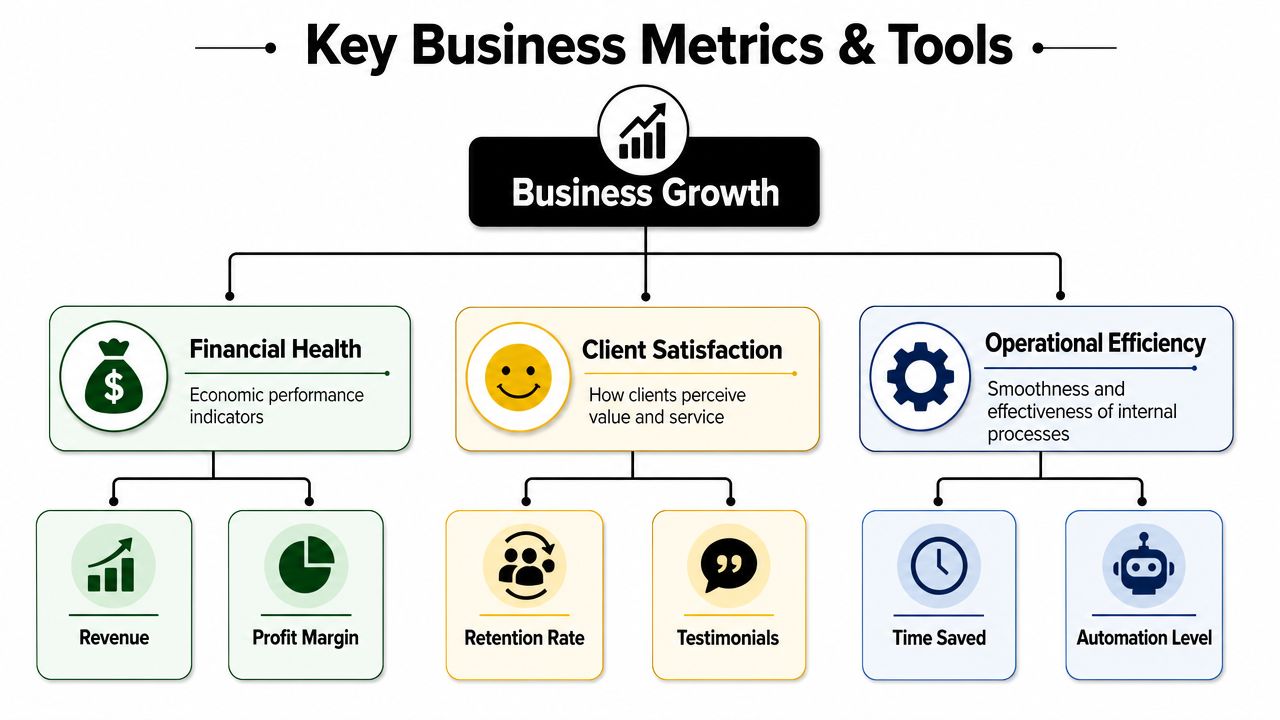
Start with a short KPI set:
Client retention rate
If retention is weak, acquisition won't save the business for long.Client lifetime value
This shows what a good-fit client is worth over time, not just on day one.Session fill rate
Useful for in-person and hybrid models where schedule gaps directly affect revenue.Payment collection reliability
If money is late, your business is less healthy than the sales number suggests.Time spent on admin
If this rises every time you add clients, the model needs better systems.
Pick tools that support the workflow
Your tech stack should match the workflow you mapped earlier. If scheduling lives in one tool, payments in another, programming in spreadsheets, and client messages across multiple apps, your reporting will stay weak because the business is fragmented.
For coaches who want one system for programming, scheduling, payments, messaging, progress tracking, nutrition logging, and habit tracking, FitCentral's fitness studio software is one option to review. Its relevance here is simple: co-founder David Spitdowski is a practicing trainer, so the product reflects real coaching workflows rather than generic software assumptions.
The best stack is usually the one that makes these questions easy to answer every month:
Who paid?
Who missed sessions?
Who is due for a review?
Which clients are drifting?
How full is the schedule?
How much time did admin eat this week?
A business plan should help you run the next month better, not just describe the business in theory.
If your current PT business plan lives in your head, take one hour today and write your workflow on one page: lead, consult, onboarding, delivery, check-in, payment, renewal. Then compare that workflow to the tools you use now. If the gaps are obvious, review FitCentral and see whether it fits the business you're aiming to run.
See also



Ready to stop fighting your software?
FitCentral gives you everything you need to manage clients, deliver results, and grow your business. Sign up today.