Affiliate Program Fitness: A Coach's Playbook for Revenue

A client finishes a check-in, tells you their friend wants the same results, and asks, “How should I send them your way?” Most coaches still answer with something loose, text them my name, or just have them DM me. That works once or twice. Then it disappears into memory, nobody follows up cleanly, and revenue you already earned through trust never gets formalized.
That's the opportunity with affiliate program fitness. This is not about turning into a salesperson. It's about building a professional referral system around recommendations that are already happening, so your best clients, peers, and partners can send people your way without confusion, awkwardness, or guesswork.
Table of Contents
Why Your Best Clients Are Your Best Marketers
The strongest referral partner in your business usually isn't a local influencer or some random affiliate you found online. It's the client who got stronger, dropped pain, built consistency, or finally stopped bouncing between programs.
They already know how you coach. They've lived the process. When they talk about you, people listen because it doesn't sound like marketing. It sounds like proof.

I've seen the same pattern over and over. A client gets great results, tells coworkers or training partners, and one of those people reaches out. Then the process gets messy. The prospect asks what package to buy. The original client wonders if there's a referral credit. You mean to keep track of it. A month later, nobody is fully sure who referred whom.
That's why affiliate program fitness works best when you treat it as administration for trust, not promotion for strangers.
The difference between accidental referrals and a real system
A loose referral setup depends on memory. A formal one depends on process.
Here's what changes when you put structure around it:
Clients know exactly what to do when someone asks about your coaching
You know who sent the lead
The reward is clear up front, so there's no awkward back-and-forth later
Your brand stays consistent, because you control how the offer is described
Practical rule: If a client has to ask twice how referrals work, you don't have a referral system yet.
This matters even more for coaches with niche credibility. If you coach runners, postpartum clients, busy dads, or women in midlife strength phases, your best referrals often come from people already inside that circle. That's one reason content ecosystems built around trusted coaches tend to produce strong word of mouth, as you can see in examples from top nutrition coaches.
What a coach-level affiliate program really is
For a solo coach, this doesn't need to look corporate. It can be simple:
A defined partner group, usually happy clients, former clients, and trusted peers
A clear offer, tied to a specific coaching service
A tracking method, even if it's basic at first
A reward, cash, account credit, or recurring commission
A short agreement, so expectations stay clean
The mistake is thinking formal means pushy. It doesn't. Formal means the client who believes in your coaching no longer has to improvise when recommending you.
That's the shift. You stop hoping referrals happen and start making them easy to repeat.
Structuring Commissions and Rewards
If the payout model is fuzzy, the whole program drifts. Partners won't know what's worth promoting, and you won't know whether the referral makes financial sense.
The first job is to match the reward to the way your coaching gets paid. Broadly, the fitness niche supports this approach because commissions are often stronger than average. The health and wellness niche averages 15.9%, compared with a cross-industry average of 10.1%, and that same analysis notes that successful health and fitness affiliates earn an average of $8,038 per month, with some high-ticket items reaching 30% to 50% commission ranges according to Post Affiliate Pro's health and fitness niche analysis.
Pick the model that matches your offer
A coach selling one-off assessments has a different margin profile than a coach running monthly programming with nutrition support. Don't copy somebody else's payout just because it sounds generous.
Three commission structures tend to work.
One-time flat fee
This is the cleanest option for starter programs. If someone refers a qualified client who signs up, they get a fixed payout or account credit.
This works well when your offer is:
Simple to understand, like an intro package or consult
Paid once up front
High-touch on the sales side, where you want to keep margins predictable
The downside is obvious. If the client stays for a long time, the affiliate gets paid once and then has no upside tied to retention.
Percentage of the first sale
This keeps compensation proportional. It's often cleaner than a flat fee when your packages vary.
This is a strong fit when:
You sell multiple packages
Your price points differ by service level
You want the payout to scale naturally with the offer
For coaches, this can feel more fair. But if your sales process includes discounts, custom pricing, or bundles, it can also create confusion unless you define exactly what counts.
Recurring commission
If you run monthly coaching, recurring commission is usually the most aligned structure. It rewards the partner for referring somebody who keeps paying and stays engaged.
That model has become much more common in subscription-based fitness offers. Industry coverage notes that digital fitness subscription programs can pay $40 to $200 per referral, and some software-based fitness affiliate programs use recurring revenue share, including a 15% recurring commission that continues while the subscription stays active, as shown in Impact's roundup of fitness affiliate programs.
If your own business runs on recurring revenue, your affiliate setup should at least consider the same logic. It also pairs naturally with stable billing systems, especially if you already use recurring payments in your coaching offer. If you need to tighten that side first, this guide on how to set up recurring payments is worth reviewing before you launch commissions.
Affiliate Commission Model Comparison
Model | Best For | Pros | Cons |
|---|---|---|---|
One-time flat fee | Intro offers, short packages, simple services | Easy to explain, easy to track, predictable cost | Doesn't reward long-term retention |
First-sale percentage | Variable pricing, multiple service tiers | Scales with the sale, feels fair across packages | Can get messy if pricing changes often |
Recurring commission | Monthly coaching, subscriptions, ongoing support | Aligns payout with retention, builds long-term partner value | Requires reliable tracking and very clear rules |
Tiered rewards | Established programs with a few strong partners | Gives top partners a reason to stay active | Adds complexity too early for small programs |
Set guardrails before you announce anything
A good commission plan answers the uncomfortable questions before they show up.
Use these filters:
Can you explain it in one sentence? If not, simplify it.
Can you calculate the payout without opening three tools? If not, your backend is too messy.
Does the reward still make sense after delivery costs and payment processing? If not, the structure is too aggressive.
Will your best affiliates care about it? A technically fair payout that nobody finds motivating won't move behavior.
The best payout model is the one your partners understand immediately and you can honor consistently.
Most coaches should start with one offer, one partner type, and one payout rule. Complexity feels seemingly clever, but it usually hides weak margins or unclear thinking.
Creating Your Affiliate Terms and Conditions
A referral goes well right up until money enters the conversation. Your client tells a friend about your coaching, that friend signs up, and then the referrer asks when they get paid. If your answer is vague, the trust you built through your coaching starts to wobble.
That is why terms matter early. A short written agreement turns a friendly referral arrangement into a professional system you can run without awkward follow-up messages.
What your terms need to say in plain English
Keep this document simple enough that a client or partner can read it once and understand how the program works. One page is often enough if you cover the points that actually create disputes.
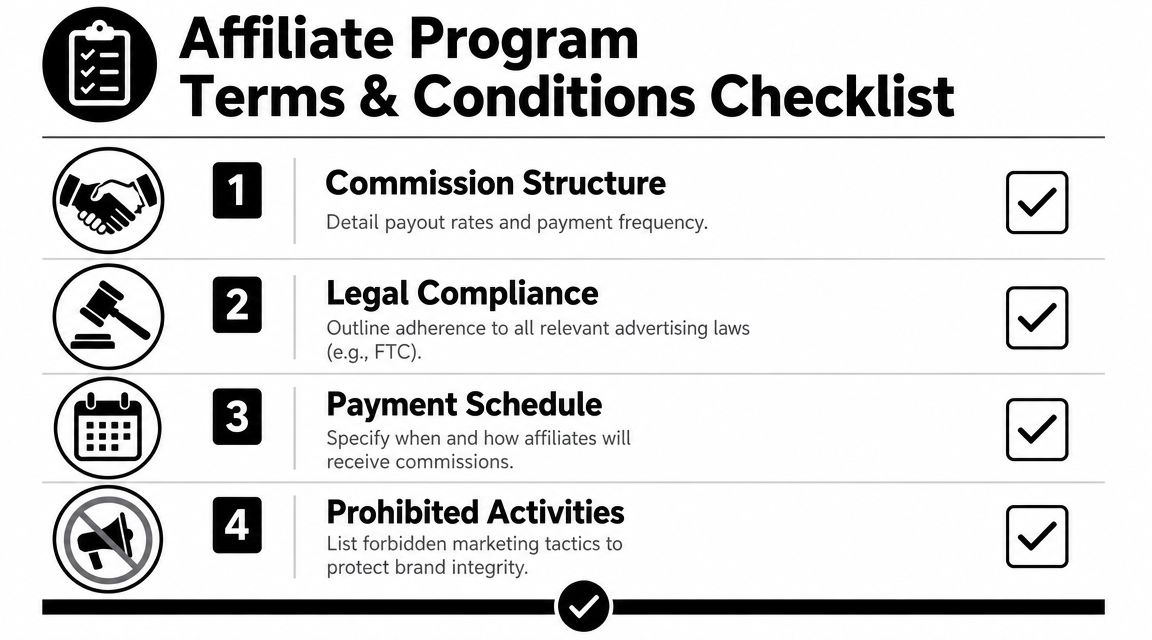
Your affiliate terms should answer five questions:
What triggers a commission
Define the event clearly. That might be when the referred client signs the contract, when the first payment clears, or after they stay active past your refund window.How payouts happen
State the payout schedule, payment method, and any minimum payout threshold. If you pay on the 1st of each month for the previous month's cleared sales, say that directly.What promotion is allowed
List the channels affiliates can use, such as social posts, email, private conversations, or custom landing pages. Also list what they cannot do, including misleading claims, fake scarcity, impersonating your brand, or promising outcomes you do not advertise.What happens with refunds or cancellations
Explain whether a refunded sale cancels the commission, pauses it, or gets netted out against a future payout.When you can remove someone from the program
Give yourself the right to end participation if someone misrepresents your service, ignores disclosure rules, or sends low-quality leads that create support problems.
This is basic business hygiene. If you already use intake forms, waivers, and coaching boundaries, affiliate terms belong in the same category of professional standards as understanding your personal trainer requirements.
The most significant legal issue is trust
Coaches usually worry about sounding formal enough. The bigger risk is running a referral program that feels hidden, sloppy, or self-serving.
If someone recommends your coaching and benefits financially, that relationship needs to be disclosed clearly. That protects the audience, protects the affiliate, and protects your brand. A creator-focused discussion on disclosure and value-first promotion also makes the broader point that promotional content works better when it sits inside a larger pattern of useful, trust-building content, not constant pitching, as discussed in this creator-focused discussion on disclosure and value-first promotion.
That should show up in your terms.
A practical standard for coach affiliates
Write your rules so a working coach can follow them. I prefer plain requirements over legal-sounding filler.
Tell partners to disclose in direct language:
On social posts, state that they may receive a commission or referral payment
In email, place the disclosure near the recommendation, not buried at the bottom
In private client conversations, mention the financial relationship before or during the recommendation
Use one simple test. If the referred person would feel misled after learning about the incentive later, the disclosure was not clear enough.
This matters more in coaching than in many other industries. You are not selling a commodity. You are formalizing referrals around a service people buy because they trust your judgment, your method, and your reputation. Good terms protect the payout process, but they also protect the relationship that makes the referral possible in the first place.
The best affiliate agreements do not make you sound like a salesperson. They let you run referrals professionally without compromising the trust that built your business.
Affiliate Tracking Software That Does Not Suck
A coach launches a referral program, a former client sends two good leads, and then the confusion starts. One person says they used the link. Another says they heard about you in a DM. The affiliate checks in about commission, and you are digging through Stripe, email, and notes trying to piece it together. That is the moment tracking stops being a software question and becomes a trust question.
If you want referrals to feel professional, the system has to answer a few basic things fast. Who referred the client. What they bought. What commission is owed. When it gets paid.
The three ways coaches usually track referrals
Coaches usually end up with one of three setups, and each one has a place.
Spreadsheet and manual attribution
This works for a small program with a handful of trusted referrers and low monthly volume. Track:
Referrer name
Referral date
Prospect name
Offer purchased
Commission owed
Payout status
The upside is control and zero extra software cost. The downside is that it depends on your consistency. It also breaks down fast when referrals come through multiple channels or two affiliates claim the same client.
I have used manual tracking early on, and it can work. It only works if you check it weekly and set clear attribution rules before there is any money to argue about.
Simple referral software
For many coaches, this is the best middle ground. You get unique referral links, a partner dashboard, basic conversion reporting, and an export you can use for payouts.
That is enough for a clean, professional program.
Skip any tool that makes basic questions hard to answer. If a partner cannot log in and see clicks, sales, and payment status on their own, you will end up acting as the reporting system.
Full affiliate platform
Use a larger platform when your program gets more complex. That usually means multiple offers, recurring payments, different commission structures, or a wider mix of partners.
The trade-off is setup time. Bigger platforms can solve real problems, but a lot of coaches buy them before they have enough referral volume to justify the extra configuration, testing, and monthly cost.
What to check before you commit
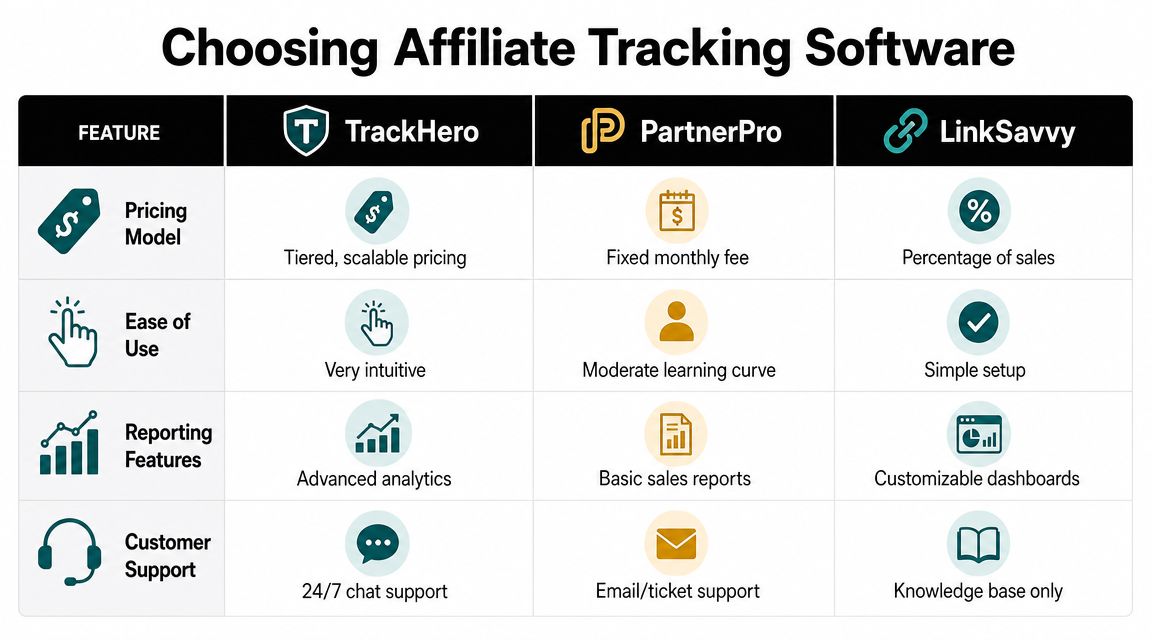
Choose based on operational fit, not feature count.
Use this checklist:
Tracking reliability
Test referral links yourself on desktop and mobile. Complete a test purchase if possible.Affiliate visibility
Partners should be able to check clicks, conversions, and payout status without emailing you.Payout workflow
Monthly commissions should be easy to calculate and export. If payouts require too many manual steps, they will get delayed.Rule flexibility
Your software should let you set different rewards for different offers as your business changes.Support quality
When tracking breaks, you need a real answer quickly. Slow support creates payout disputes, and payout disputes damage trust.
A referral system sits inside client acquisition. Treat it with the same care you give scheduling, payments, and delivery.
After launch, the software should also help you spot patterns that matter in a coaching business. Which affiliates send qualified clients. Which offers convert well through referrals. Which partners bring in people who stay, renew, and fit your service. Raw click volume is not the point. Good tracking helps you protect the trust you already have with clients and formalize referrals without turning the process into a sales machine.
If you already hold your business tools to a high standard, apply the same filter here you would use when choosing the best personal trainer app for running client delivery and operations. Clear workflows, dependable reporting, and responsive support beat bloated feature lists every time.
How to Recruit and Activate Your Affiliates
A coach finishes a great client check-in, gets a thank-you message, and hears, "I've already told two friends about you." That is the moment to build from. The best affiliate programs in fitness usually start from trust that already exists, then turn that trust into a clear referral process with tracking, expectations, and payouts.
You do not need a big roster. You need a small group of people who know how you coach, who you help, and what a good-fit client looks like. In practice, that usually means former clients with strong results, current clients who already send referrals, and a few trusted peers who serve the same audience from a different angle.
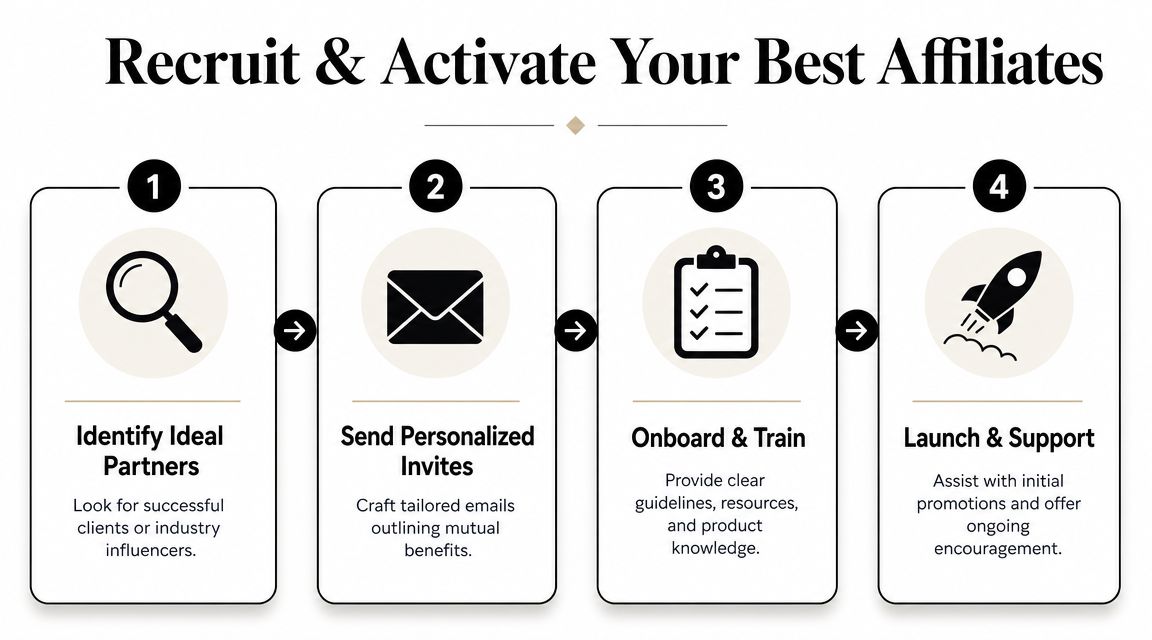
Focused partner selection wins because a handful of strong partners usually drives most referral revenue. That matches what many coaches see after launch. A small number of affiliates keep producing because they understand your offer well and send the right people, while the rest stay inactive.
Start with the smallest useful group
For a first cohort, keep it small enough that you can onboard each person yourself and answer questions fast.
Choose people who fit at least one of these:
They've had a strong result with your coaching
They already refer others without being prompted
They speak clearly about who your coaching is for
They share your standards around honesty and client fit
Audience size is easy to overvalue. Alignment matters more. I would take three referrals from a past client who understands my process over a bigger creator who sends curious leads that never buy, never engage, or churn in month one.
This also connects to your intake process. If referrals are coming in and your setup still feels loose, tighten that first experience with the best client onboarding software for coaching businesses.
A quick video can also help you think through partner activation and communication:
A simple invite that gets replies
Send a direct message or email. Keep it personal, specific, and easy to answer.
Use something like this:
I'm putting a formal referral program around my coaching so clients and colleagues have a clean way to send people my way. You came to mind because you understand how I coach and who I help. If you'd like, I can send you the details, your referral link, and the payout structure. No pressure if it's not a fit.
That works because it respects the relationship. You are not asking someone to become a salesperson. You are giving them a professional way to refer people they already believe you can help.
Onboarding that takes less than an hour
Activation falls apart when onboarding feels vague or heavy. Keep the package short and usable.
Welcome email
Include their unique link, who the offer is for, and the next step to make a referral.One-page partner sheet
Cover the commission structure, payout timing, disclosure expectations, and approved language.Short video from you
Walk through how you coach, who gets the best result, common objections, and what kind of referrals you want.
Then follow up after the first week. Ask if they want a custom message for their audience, a short caption they can copy, or a quick answer to any client-fit questions.
Good affiliates rarely need hype. They need clarity, fast support, and confidence that if they send someone your way, you will handle that referral well.
That is the activation standard for a working coach. Keep it personal. Keep it organized. Build the program around trust you already earned, then make it easy for the right people to refer without feeling awkward about money.
Common Pitfalls and How to Keep Affiliates Engaged
A lot of affiliate programs don't fail because the commission is too low. They fail because the coach gets busy, communication slips, and partners stop hearing from them unless there's a problem.
That silence reads as neglect. If people are willing to send business your way, they need to feel that the relationship is active and respected.
What breaks programs fast
These are the mistakes that usually cause the drop-off:
Late payouts
Nothing erodes confidence faster. If you owe someone money for a referral, pay it when you said you would.No communication
Affiliates should not have to guess whether the program still exists.Weak tracking
If attribution is messy, every commission becomes a debate.Bad-fit referrals
When you don't define who your coaching is for, partners send anybody. Then everyone gets frustrated.No support materials
Even motivated partners stall when they have to write everything from scratch.
How to keep good partners active
This part does not need to be complicated. A few light-touch habits go a long way.
Send a short monthly update
Share one program win, one reminder about the offer, and one simple promotional angle they can use.Give them usable assets
Provide a short email blurb, a few story slides, a referral FAQ, and approved language around who the program fits.Tell them what converted
If a certain message or client type resonates, say so. Good partners want feedback.Review partner quality, not just volume
The best affiliate is not the person who sends the most leads. It's the one who sends clients who stay engaged and coach well.Ask for feedback
Good affiliates can usually tell you where your offer is confusing before a prospect ever says it.
Keep the relationship coach-level. A quick check-in and a paid-on-time commission will beat a fancy portal with no human contact.
If you want one move to make within the next 24 hours, do this: draft a one-paragraph summary of your affiliate offer and email it to the three clients who have gotten the best results with you. Ask for their feedback. Not for promotion yet, just feedback. Their questions will show you exactly where your program is still vague.
If you're tightening the systems behind your coaching business, not just referrals, FitCentral is built for the day-to-day reality of running a client roster without duct-taping together spreadsheets, payment tools, and messaging apps. It was co-founded by David Spitdowski, a practicing personal trainer who still coaches real clients, so the product reflects how coaches work. If you want cleaner programming, scheduling, payments, check-ins, and client communication in one reliable platform, FitCentral is a practical next step.
See also




Ready to stop fighting your software?
FitCentral gives you everything you need to manage clients, deliver results, and grow your business. Sign up today.