7 Top Nutrition Coaches to Learn From in 2026

A trainer takes on six nutrition clients, builds the service with Google Sheets, intake forms, DMs, and manual check-ins, and gets away with it for a month or two. Then reschedules pile up, feedback slows down, billing gets patched together, and client adherence drops for reasons that have nothing to do with nutrition knowledge.
That pattern shows up all the time. The limiting factor usually is not coaching skill. It is offer design, delivery cadence, and the systems behind the service. Coaches who grow a profitable nutrition arm tend to get three things right early: they define what support includes, they set clear response windows, and they use tools that keep client communication and tracking in one place. A good nutrition coaching app for trainers helps, but the bigger lesson is operational. Better service models keep quality steady as the roster grows.
Nutrition coaching can become a serious revenue stream, but only if the backend holds up under real client volume. A model that works for five clients often breaks at fifteen. Check-ins get late. Accountability gets vague. The coach ends up selling access while delivering inconsistency.
That is the lens for this article. The coaches and companies below are not interesting just because they are well known. They are worth studying because each one made specific decisions about packaging, pricing, accountability, and client management. Some of those decisions scale well for a solo trainer. Some create trade-offs in personalization, margins, or workload. The useful move is to study the model and apply the parts that fit your own business.
Table of Contents
1. Working Against Gravity (WAG)
What trainers should copy
2. Macros Inc
Best lesson from the model
3. Renaissance Periodization (RP) 1:1 Coaching
What works and what doesn’t
4. Team Biolayne
What makes this model useful
5. Legion Athletics VIP Coaching
The business takeaway
6. Born Fitness Coaching
Why this model holds up
7. Stronger By Science Coaching
What to apply this week
Top 7 Nutrition Coaches Comparison
Your Next Step Systematize Your Own Coaching
1. Working Against Gravity (WAG)
If you want to study a clean macro coaching business, start with Working Against Gravity. Their model is simple enough for lifestyle clients to follow, but structured enough that coaches can repeat it without reinventing the wheel every week.
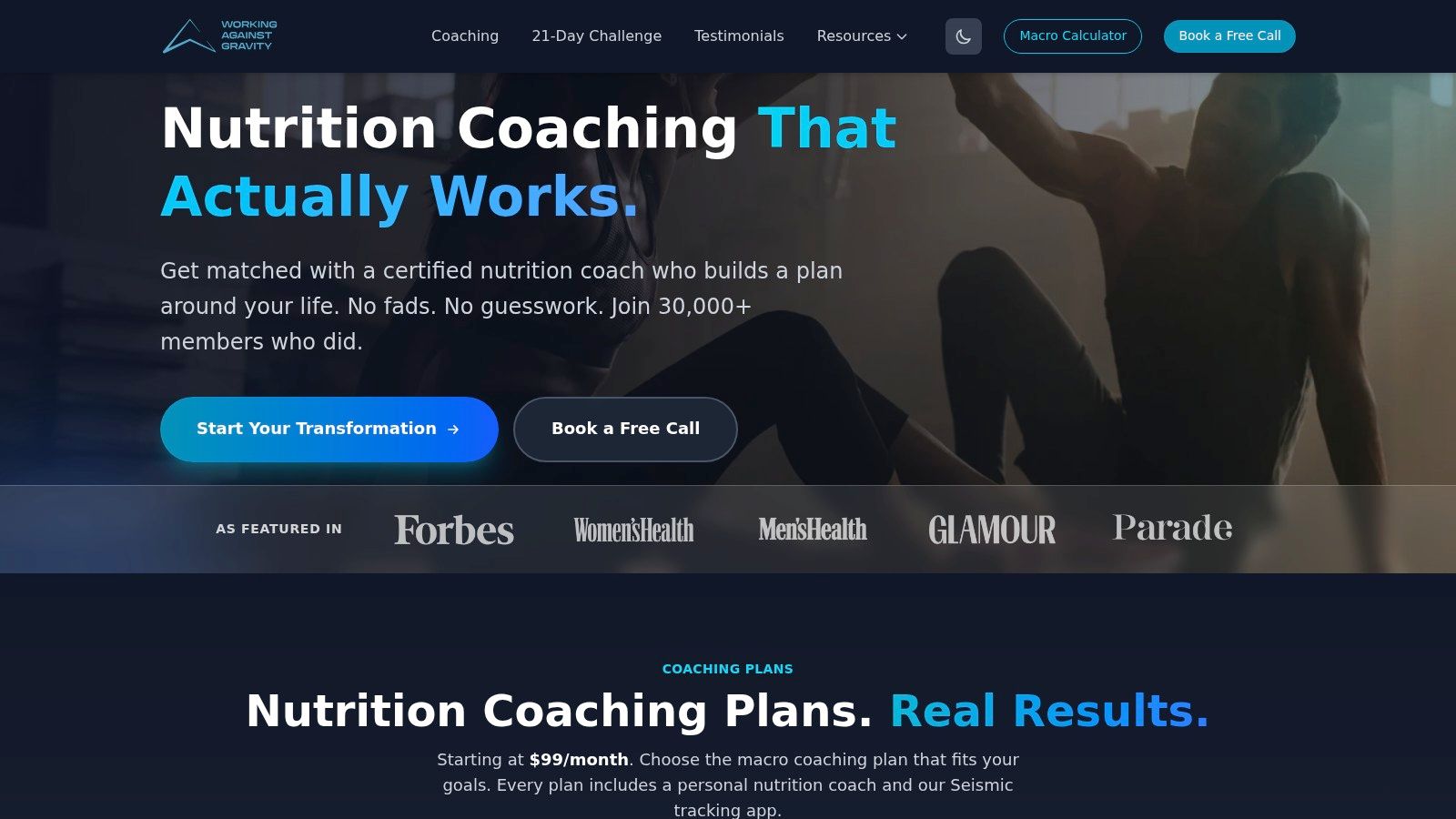
WAG pairs macro prescriptions with habit work, messaging, and progress tracking inside its Seismic app. That combination matters. A lot of coaches still overrate the meal plan and underrate the client workflow. WAG’s structure makes the service feel coached, not dumped on the client.
The trade-off is obvious. Macro-heavy systems work best for clients who are willing to log intake consistently. They’re less ideal for clients who resist tracking or who need a looser, behavior-first approach before they’re ready for numbers.
What trainers should copy
Three things stand out in the WAG setup:
Tiered support: Different service levels make it easier to serve clients who want either lighter accountability or more hands-on coaching.
Visible expectations: Clients can see what they’re buying before they commit, which cuts down on sales friction.
Habit support alongside macros: This keeps coaching from becoming a numbers-only service.
Practical rule: If your nutrition offer depends on custom effort every single week, it won’t scale well past a modest roster.
One more lesson matters for working coaches. WAG’s model reinforces that nutrition coaching lives or dies on consistent logging, messaging, and review. If your current process still relies on scattered apps and manual follow-up, it's worth tightening your stack with a purpose-built nutrition coach app for personal trainers.
2. Macros Inc
Macros Inc is a good example of a mainstream offer that doesn’t overcomplicate itself. One-to-one coaching, weekly check-ins, monthly video calls, direct messaging, and the option to bundle fitness programming with nutrition. That’s easy for clients to understand and easy for a coach to sell.
What I like here is the packaging logic. It meets broad fat loss and recomposition demand without pretending every client needs concierge coaching. The HSA/FSA angle also lowers buying friction for some clients, which matters more than a lot of coaches realize.
The downside is that commitment can feel heavy for buyers who want to “try” coaching first. And like WAG, this model tends to skew macro-centric. That works well for many clients, but it’s not automatically the right fit for people who need simpler nutrition habits before detailed tracking.
Best lesson from the model
Macros Inc gets one core business principle right. It keeps the offer easy to explain.
Weekly cadence: Clients know when they’ll hear from their coach.
Bundle option: Training plus nutrition increases account value without creating a second sales process.
Straightforward positioning: The offer speaks to common goals, not niche language.
Clear packaging beats clever packaging. A client should understand your nutrition service in under a minute.
There’s a bigger reason this matters now. The nutrition coaching segment is projected to hold a 34.8% share of the 2026 global health coach market in Coherent Market Insights’ health coach market report. That doesn’t mean every trainer should build a giant nutrition business. It does mean clear service offers are landing in a growing market.
If you’re bundling training with nutrition, review whether your software pricing still makes sense. Transparent coaching software pricing matters more once each client includes messaging, habits, payments, and check-ins, which is why many coaches compare their stack against FitCentral’s pricing.
3. Renaissance Periodization (RP) 1:1 Coaching
RP’s coaching service is what high-touch, evidence-based coaching looks like when a brand leans hard into expertise. Weekly calls, direct support, individualized nutrition guidance, and access to digital tools create a premium service environment.
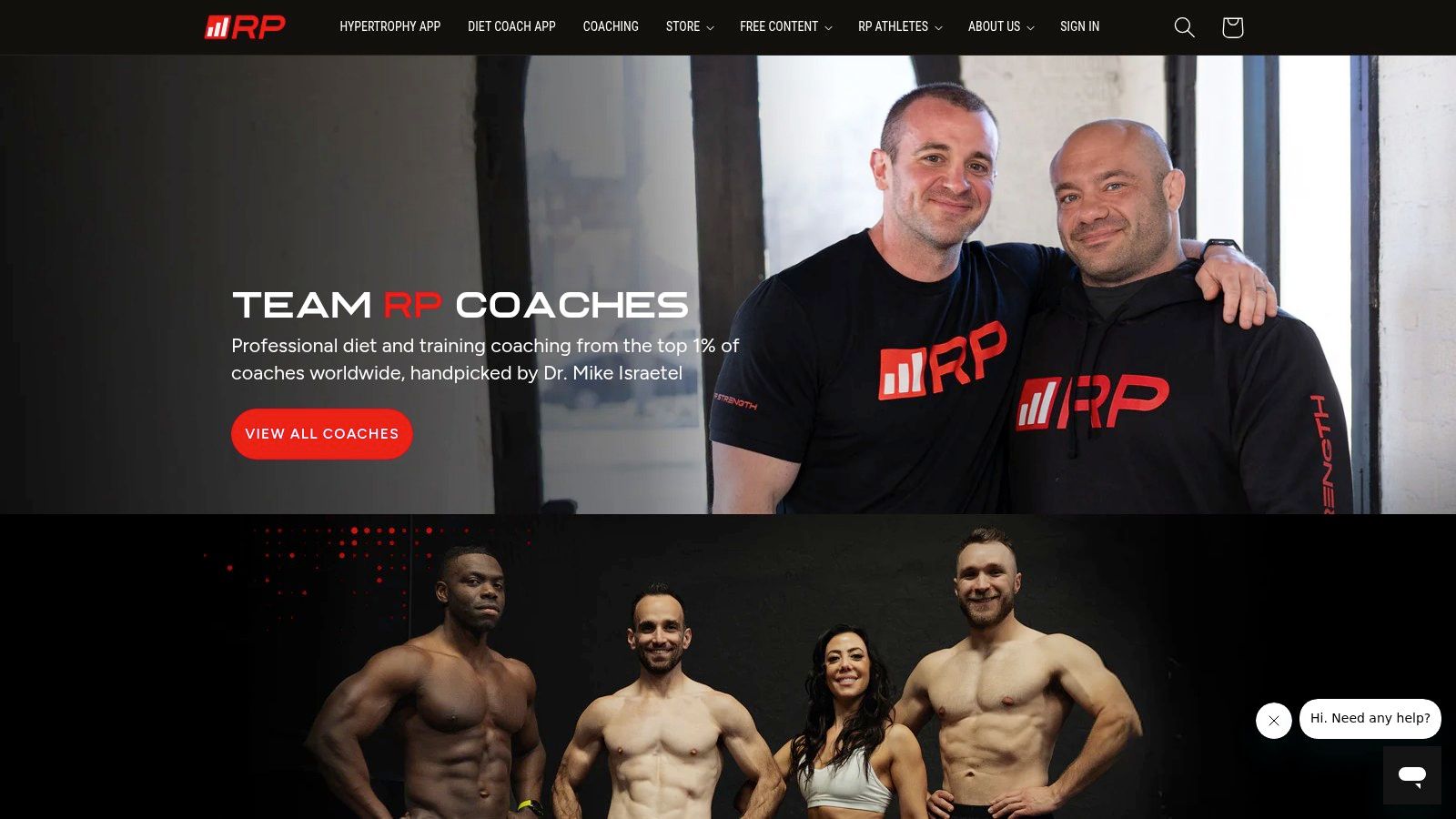
This is a strong fit for athletes, physique clients, and serious performance-focused clients who want a coach with a deeper bench of credentials. It also shows that premium nutrition coaching usually isn’t just “better macros.” It’s better access, sharper review cycles, and more confidence in the decision-making.
The friction point is price opacity. Public-facing visitors can see the value proposition, but not always the full cost up front. That can work for premium brands, but it also creates more work in the sales process.
What works and what doesn’t
RP’s model is strongest when the client values precision and direct accountability.
Works well for: Athletes, competitors, and lifters who expect structured feedback.
Works less well for: Casual clients who want fast answers, low cost, and minimal commitment.
Business lesson: A premium offer needs premium operations, not just premium language.
The more advanced your positioning, the more your onboarding has to prove you can deliver it.
There’s also a broader industry signal here. Precision Nutrition, another major name in the category, has certified over 100,000 coaches since 2000, as noted in OnPoint Nutrition’s overview of top online nutrition coaching programs. That tells you the market respects systems and education, not just personality-driven branding.
For solo coaches, the practical takeaway is simpler. If you want to sell premium nutrition coaching, your client journey has to feel tight from consult to check-in to adjustment. That’s one reason trainers pay attention to platforms built by active coaches, including the team story on the FitCentral company page.
4. Team Biolayne
Team Biolayne is a strong example of specialized coach matching instead of one-size-fits-all delivery. The brand has broad recognition, but the more useful lesson is operational. They don’t treat “nutrition coaching” like one generic service.
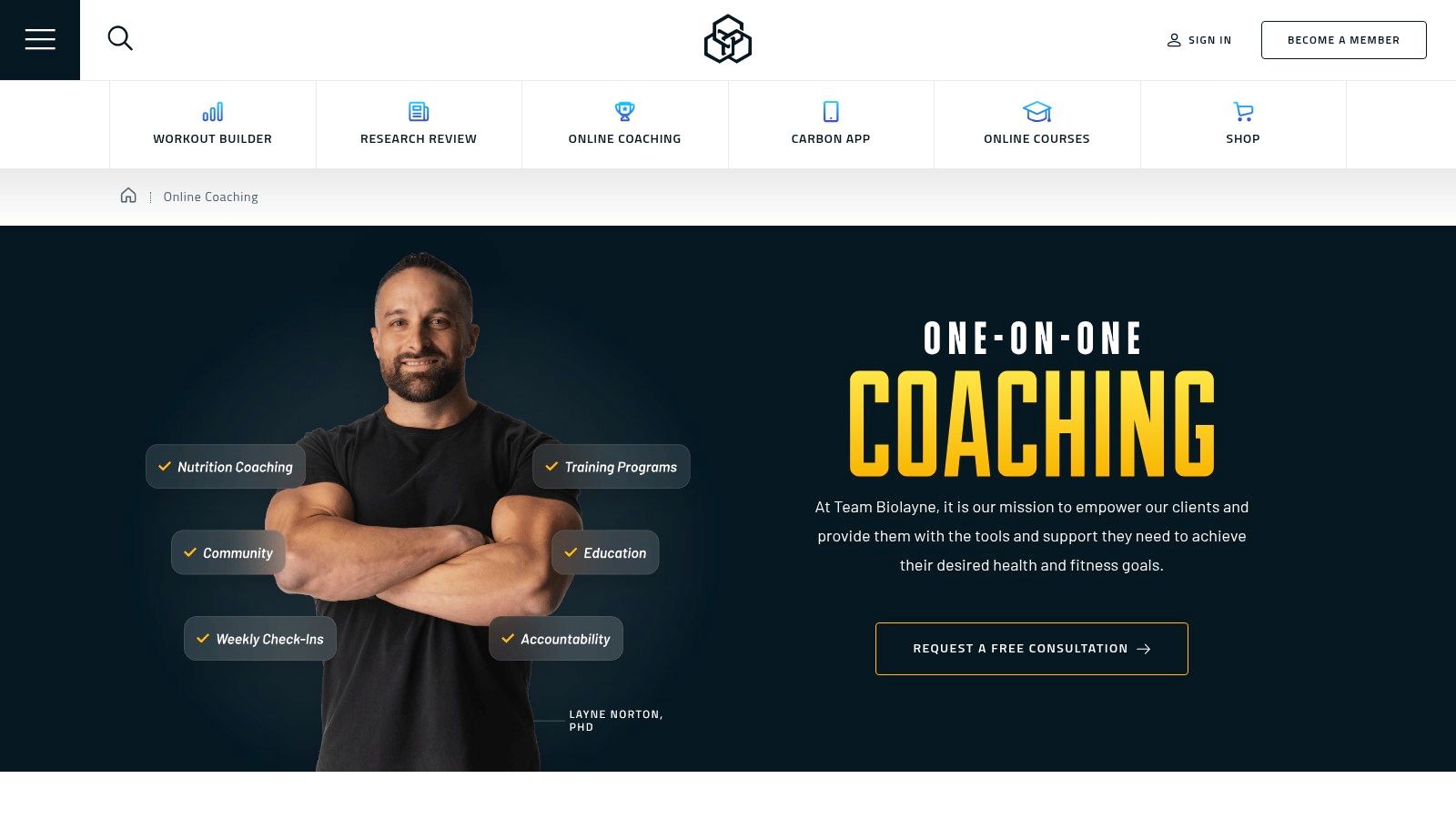
Clients come in through a consult and matching process, then get steered toward coaches with relevant specialties such as contest prep, women’s health, intuitive eating, or more complex nutrition concerns. That’s smart. It protects the brand and improves fit before the coaching relationship even starts.
A lot of solo trainers can learn from this without building a team. You don’t need multiple specialists on staff to apply the principle. You just need clearer service boundaries and a better intake process.
What makes this model useful
This setup works because it respects scope.
Coach matching first: Intake screens for fit before coaching begins.
Specialization: Different client problems get different coaching styles.
Education-forward delivery: Clients aren’t just told what to do. They’re taught why.
That last point matters legally as well as operationally. One of the biggest mistakes newer nutrition coaches make is drifting into advice that belongs in a licensed medical setting. The practical boundary for many trainers is habit coaching, food education, recipe guidance, and performance fueling, while medical nutrition therapy sits outside scope. That issue is covered well in Two-Brain Business’s discussion of nutrition coaching red zones.
Good coaches don’t just know what to recommend. They know when not to recommend it.
If you’re still figuring out those boundaries, keep your credentials, intake, and coaching language clean. A lot of that starts with the right education path, which is why many trainers brush up on personal trainer requirements and credentials before expanding their nutrition service.
5. Legion Athletics VIP Coaching
Legion Athletics VIP Coaching packages nutrition and training inside a 90-day transformation frame. Weekly calls, unlimited messaging, written progress reviews, and personalized diet guidance create a service that feels highly accountable without being confusing.
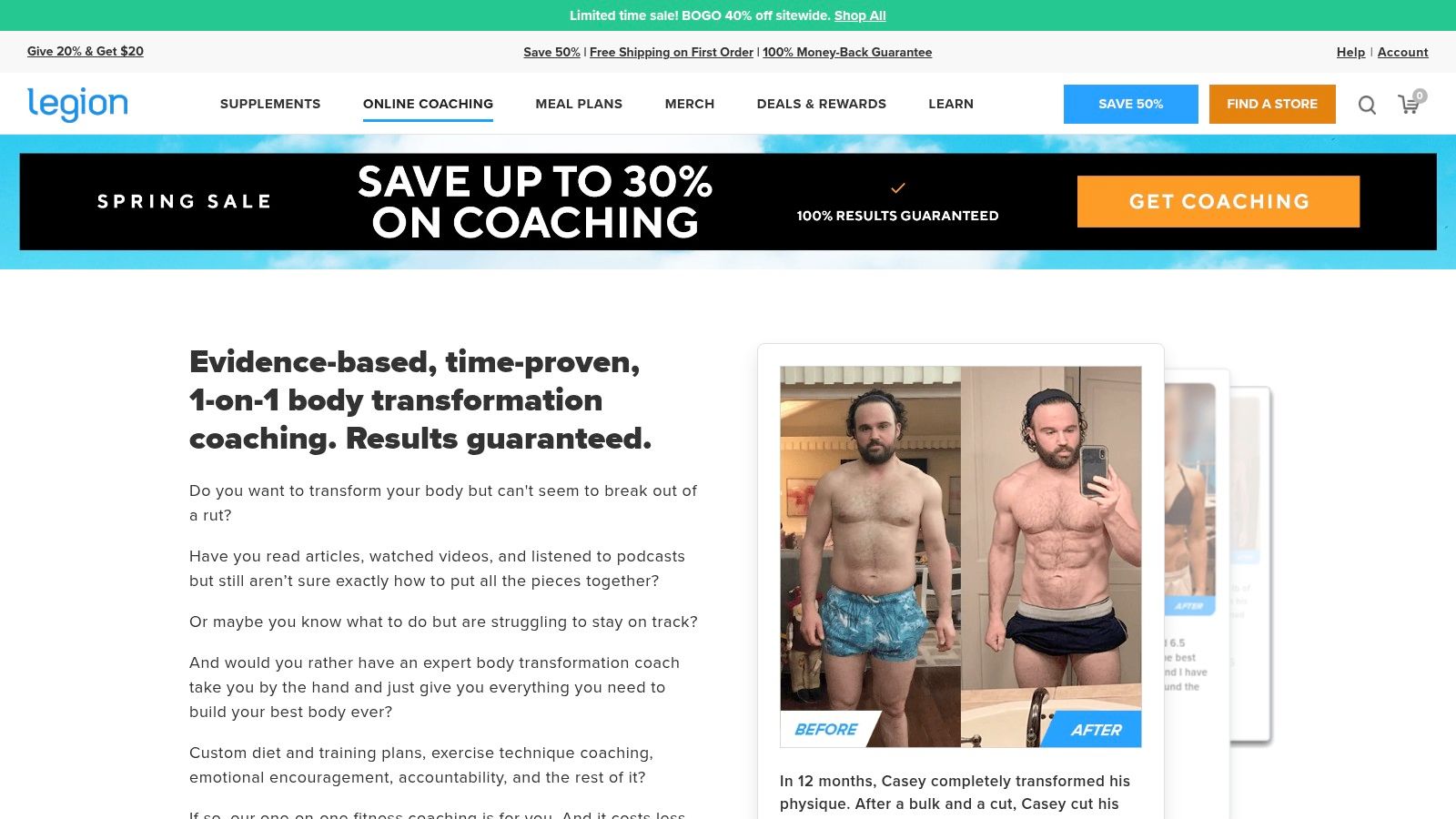
The money-back guarantee is the sharpest business move here. It lowers perceived risk for hesitant clients. Most coaches won’t want to copy that exact policy, and plenty shouldn’t. But the underlying lesson is worth taking seriously. Buyers stick when the service feels structured, responsive, and low-friction from day one.
This model also fits a broader shift toward virtual nutrition support. The virtual nutrition coach app market is projected to grow at a 16.17% CAGR from 2023 to 2033 in Market.us reporting on virtual nutrition coach apps. More coaches are selling remote accountability, not just static plans.
The business takeaway
Legion’s offer works because clients can feel the cadence before they buy.
Defined review rhythm: Weekly calls and written progress reviews create predictability.
Lifestyle flexibility: Eating-out guidance makes adherence more realistic.
Reduced purchase risk: The guarantee makes the first yes easier.
A lot of coaches miss this. They think clients buy information. Most clients buy follow-through.
If your offer sounds like “custom plan plus support as needed,” that usually means the support system isn’t defined enough.
6. Born Fitness Coaching
Born Fitness Coaching sits on the opposite side of the spectrum from larger-volume systems. It’s more bespoke, more concierge, and more obviously built around limited capacity.
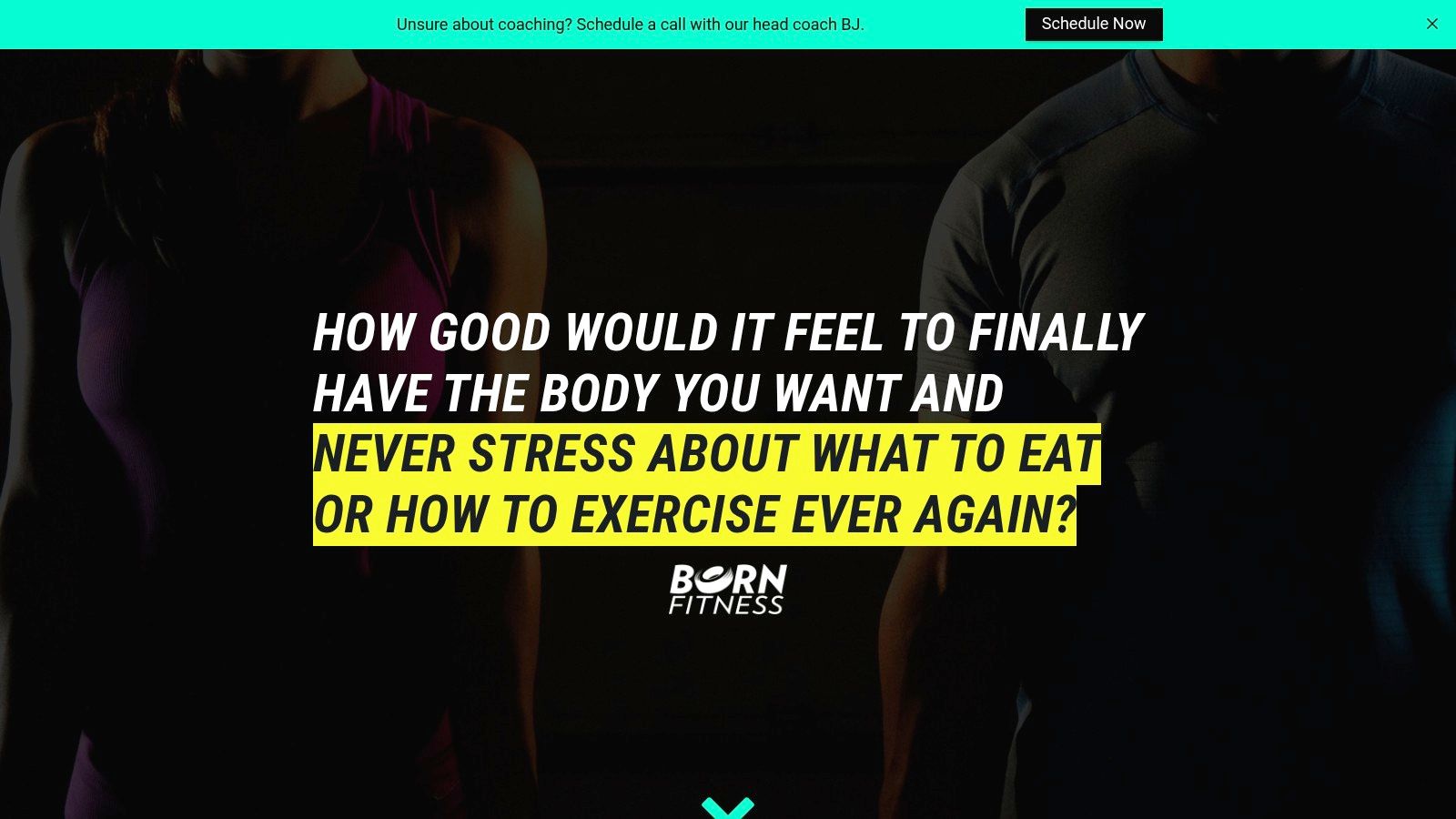
That’s important because not every trainer should try to copy high-volume macro coaching. Some coaches are better off with a smaller book of higher-touch clients, especially if their audience is made up of busy professionals who care more about personalization than price.
Born Fitness also does a good job with range. There’s a stronger premium service for clients who want full support, and a lower-touch option for those who want guidance without full coaching. That kind of ladder matters if you want to keep leads in your ecosystem instead of losing them when they’re not ready for your top offer.
Why this model holds up
This approach works when the coach’s value is interpretation, adjustment, and context.
Capped roster: Limited availability supports service quality.
High personalization: The program bends around the client’s life, not the other way around.
Lower-touch option: Not every lead needs your most intensive service.
The risk is obvious. Bespoke coaching can turn into over-servicing fast. If every client gets a fully unique system with no standard check-in structure, your margins disappear and your week fills with admin.
Tools hold greater significance than branding. Coaches moving from stitched-together systems often need a better way to manage notes, check-ins, payments, and communication in one place. That operations gap is exactly what many hybrid coaches talk about when they leave software with rising costs, clunky workflows, or product feedback that never gets addressed.
7. Stronger By Science Coaching
A prospect comes in wanting nutrition help, but not programming. Another wants training support and plans to handle food on their own. If both offers sit inside one bundled package, the sales call gets awkward fast. Stronger By Science Coaching avoids that problem by separating nutrition-only, training-only, and combined coaching.
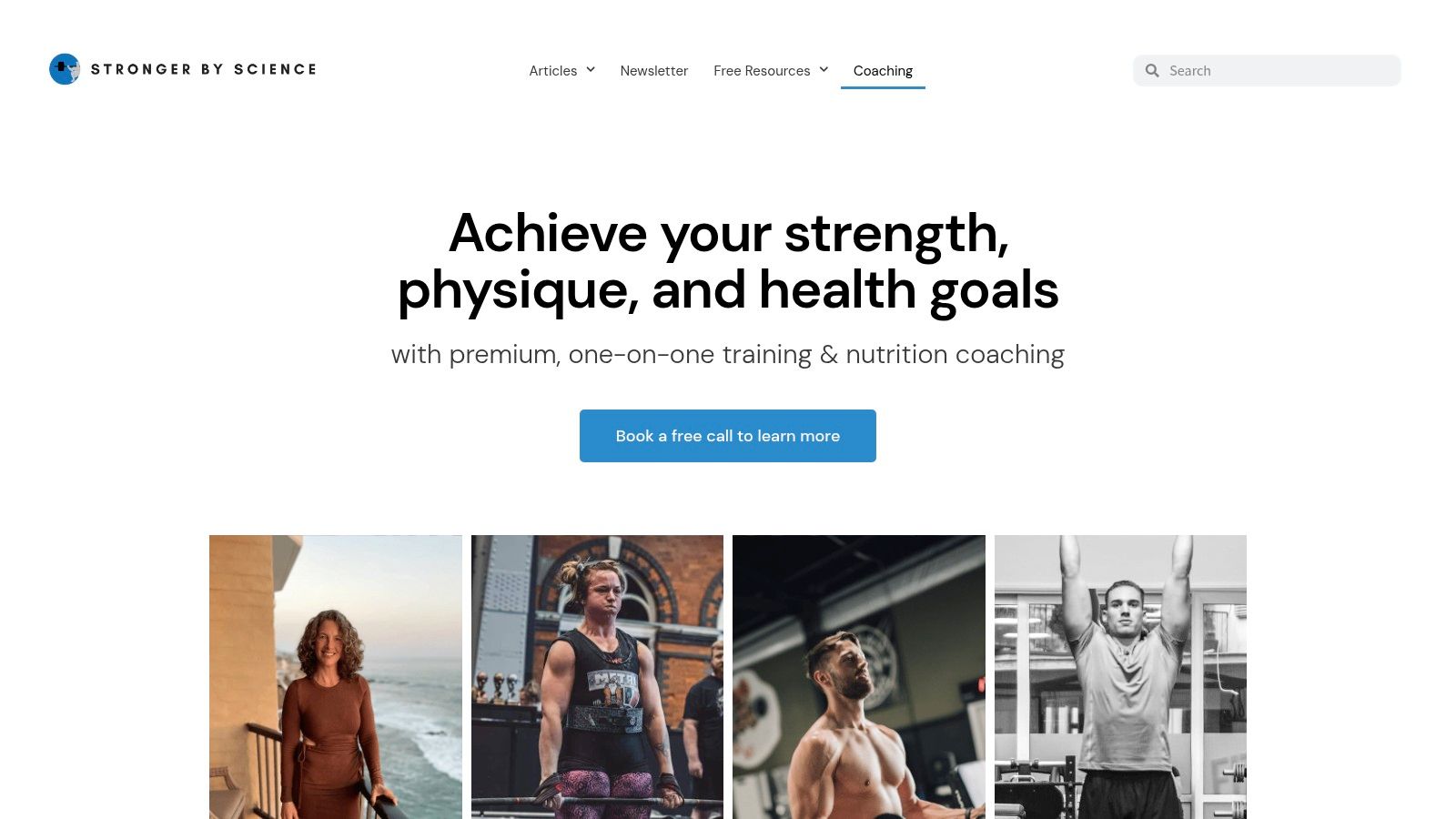
That packaging choice does more than improve conversion. It protects delivery. Coaches who force every client into the same container usually end up discounting, over-customizing, or taking on clients who were never a clean fit for the service in the first place.
This model also tells you a lot about the brand. Stronger By Science attracts clients who expect logic, clear explanations, and recommendations tied to outcomes. That sounds appealing, but it creates a higher bar for operations. If your check-in reviews are vague or your adjustment process lives in scattered notes, an analytical brand promise falls apart quickly.
What to apply this week
The useful takeaway is service design, not popularity.
Separate service tracks: Sell nutrition, training, and hybrid coaching as distinct offers if clients in your audience buy at different levels.
Define the decision rules: Spell out how you adjust calories, macros, training volume, or weekly targets so clients understand the method.
Match delivery to brand: An evidence-based position needs clean forms, organized feedback, and consistent follow-up.
There is a trade-off here. More package options can raise conversions, but every additional offer adds admin, pricing decisions, and client communication work. Solo coaches usually do better with two or three clearly defined paths than a menu with too many variations.
Brand presentation matters here because analytical buyers notice sloppiness. Sharper intake forms, cleaner check-in templates, and basic assets like fitness trainer business cards reinforce professionalism before the first coaching adjustment is even made.
Top 7 Nutrition Coaches Comparison
Program | 🔄 Implementation complexity | ⚡ Resources & commitment | ⭐ Expected outcomes | 📊 Ideal use cases | 💡 Key advantages / tips |
|---|---|---|---|---|---|
Working Against Gravity (WAG) | Moderate, weekly macro tracking, habit work, coach adjustments via Seismic | App-based logging; tiered plans (Lite→Plus); variable coach touch | Reliable recomposition and fat‑loss with structured accountability | Lifestyle fat loss, recomposition, clients wanting macro structure | Transparent tiers and refined coaching; tracking emphasis may not fit everyone |
Macros Inc | Moderate, weekly check‑ins + monthly video calls; straightforward workflow | HSA/FSA eligible; 6‑month commitment required; bundle option for programming | Solid outcomes for mainstream fat‑loss and recomposition | Broad lifestyle clients, those wanting combined fitness+nutrition | Clear pricing and accessible; macro‑centric and longer minimum commitment |
Renaissance Periodization (RP) 1:1 | High, weekly Zoom calls, fast response, evidence‑focused protocols | Premium resources: PhD/RD roster, RP tools; 3‑month minimum, pricing varies | High performance and physique outcomes for disciplined clients | Athletes, physique competitors, weight‑class sports | Deep credentials and accountability; premium cost and minimum term |
Team Biolayne | Moderate–High, consult + coach‑matching; specialist pathways and structured onboarding | Specialist coaches (women’s health, gut, intuitive eating); premium pricing, limited spots | Strong outcomes for complex or competition cases and nuanced needs | Competitors, complex clinical cases, clients needing specialist care | Research‑driven brand and specialist breadth; pricing opaque, availability limited |
Legion Athletics VIP Coaching | Moderate, weekly calls, unlimited messaging, written reviews, 90‑day focus | Full‑spectrum remote coaching; free consult; refund guarantee reduces risk | Good short‑term transformation and accountability if engaged | General population seeking 90‑day transformation, risk‑averse clients | Consumer‑friendly refund and structured reviews; pricing disclosed in consult |
Born Fitness Coaching | High, concierge, deeply personalized plans and frequent coach adjustments | Capped roster for quality; clear pricing; higher cost and potential waitlist | Very high personalization and adherence for busy clients | Busy professionals wanting bespoke, white‑glove coaching | Concierge service with transparent pricing; limited slots and premium fees |
Stronger By Science Coaching | Moderate, research‑driven, flexible packages (nutrition/training/combined) | Curated coach roster; transparent service descriptions; application/checkout pricing | Strong performance and body‑composition results for data‑oriented clients | Lifters, athletes, clients who prefer evidence and metrics | Clear rationale and flexible packaging; best for clients comfortable with data |
Your Next Step Systematize Your Own Coaching
The shared pattern across these top nutrition coaches isn’t a secret nutrition method. It’s a repeatable service system. They know how a client enters, where communication happens, how check-ins run, when adjustments get made, and what level of support the client should expect.
That’s the part many independent coaches skip. They build the nutrition prescription, but not the delivery engine. Then they wonder why check-ins drift, messages get missed, and the service starts feeling heavier every month. The issue usually isn’t coaching skill. It’s workflow.
Start by mapping your process from the first inquiry to the fourth week of coaching. Write down every step. Where does the client fill out intake? Where do you review food logs? Where do you store progress photos, notes, and habit data? How do payments run? If you need three or four tools to answer those questions, that’s probably where your friction lives.
A lot of coaches have already been through the same cycle. They signed up for software that looked good at first, then watched prices climb without explanation after an acquisition, dealt with bugs that sat unresolved, or sent product feedback into a void. That skepticism is fair. It’s also why trust matters so much when you rebuild your backend.
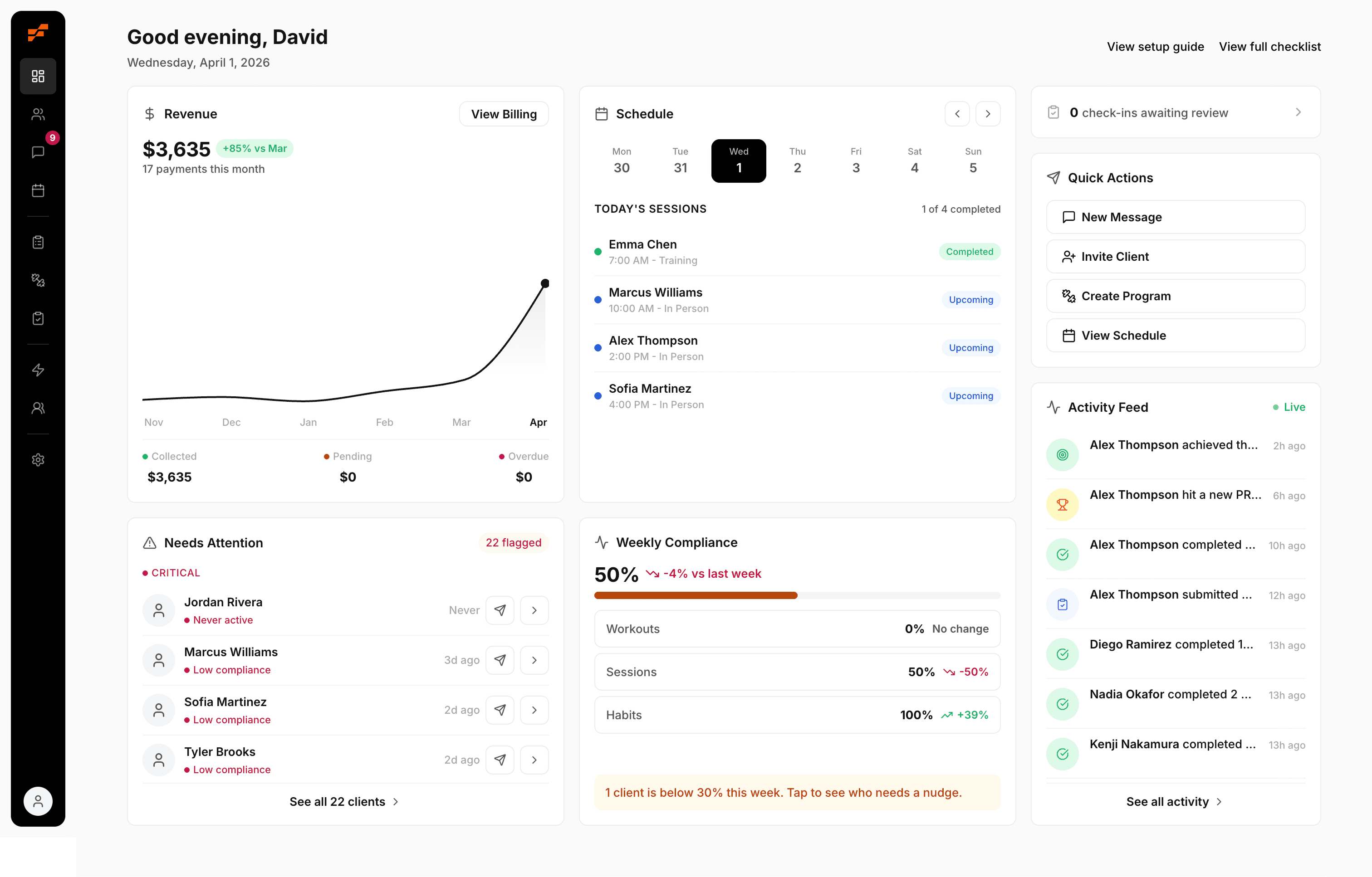
David Spitdowski, co-founder of FitCentral and a practicing personal trainer, built the platform around the day-to-day realities coaches deal with. The point isn’t flashy software. It’s a reliable workflow for programming, nutrition, messaging, scheduling, progress tracking, and payments, built by someone who still coaches clients himself.
Your move this week is simple. Audit your current nutrition coaching workflow and fix one bottleneck within 24 hours.
If check-ins are inconsistent: Build a standard weekly review template.
If payments are messy: Move recurring billing into one system.
If client data is scattered: Create one home for notes, progress photos, logs, and messages.
If communication is slow: Set one channel and one response expectation.
Better systems protect your time. Further, they make your coaching feel better to the client.
If you’re tired of running nutrition coaching through spreadsheets, DMs, and software that keeps getting worse, look at FitCentral. It gives you one reliable place to manage programming, nutrition logging, habit tracking, client messaging, scheduling, progress data, and payments, with transparent pricing of $29 per month plus $1 per active client. It was built by practicing trainer David Spitdowski for coaches who need a backend they can trust, not another platform that gets bloated, buggy, or more expensive after the sale.
See also
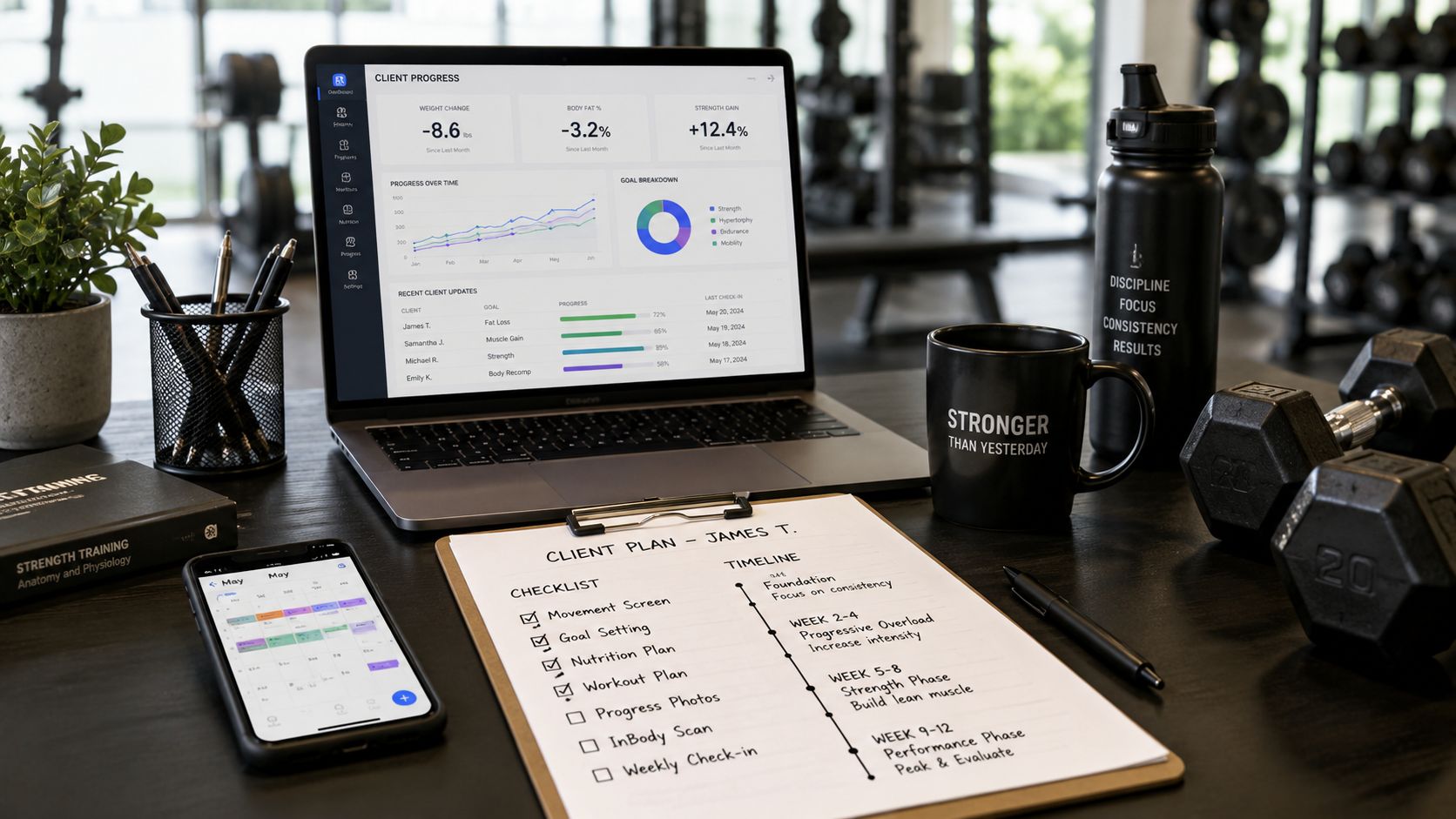

Ready to stop fighting your software?
FitCentral gives you everything you need to manage clients, deliver results, and grow your business. Sign up today.