Master Your Exercise Programming Template
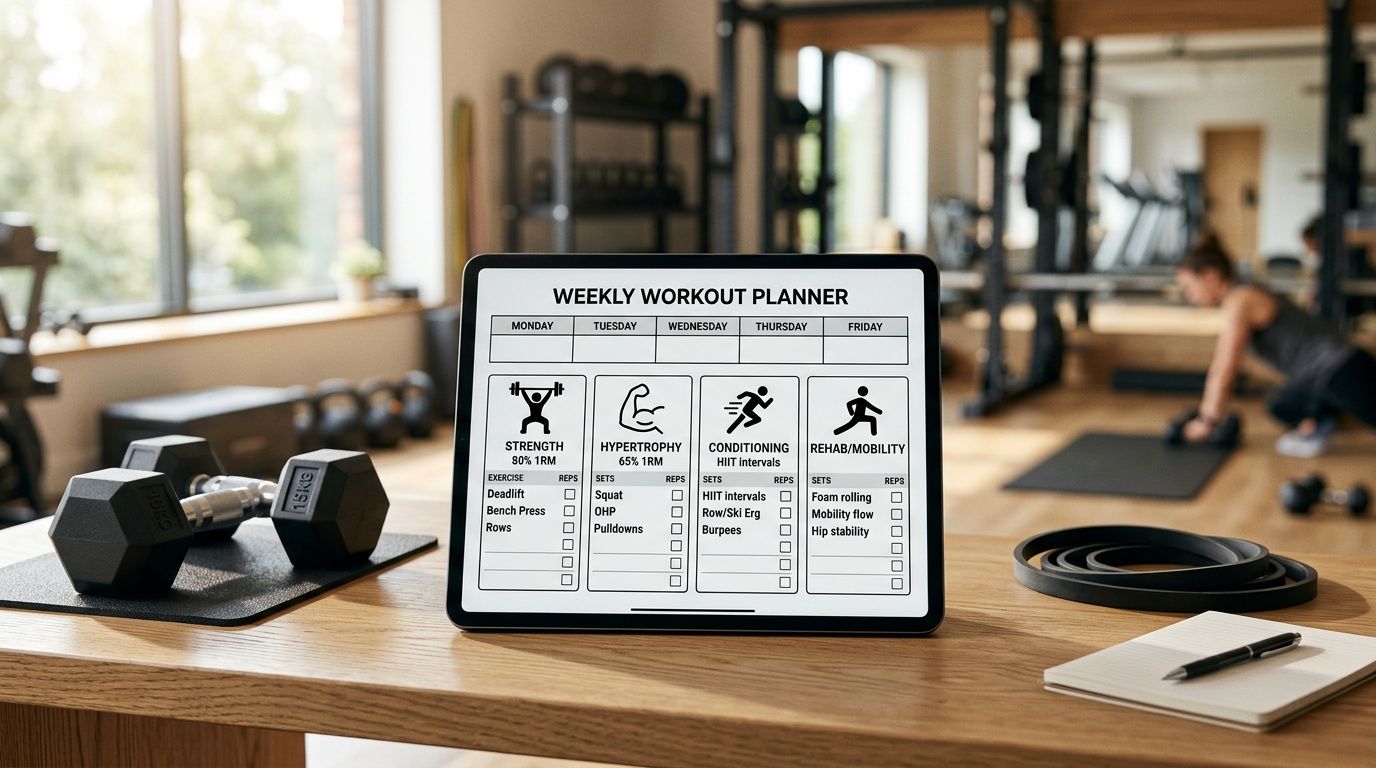
It's 9 PM on Sunday. You're still in a spreadsheet, duplicating the same lower-body day for the fourth time, changing one row for a home client, another row for a shoulder issue, and another for the client who missed half the week. That work feels productive, but most of it isn't coaching. It's repetition.
A solid exercise programming template fixes that. Not by turning your service into cookie-cutter programming, but by giving you a repeatable framework you can individualize fast. That matters when your roster grows, because static plans don't just waste your time. They also hurt retention. 30-40% of clients drop out when they can't see progress clearly, and dynamic tracking tools reduce that problem when clients can follow their own progress in real time, according to this article on static plans and progress visibility.
The coaches who stay sane with 20, 30, or 50 clients aren't writing from a blank page every week. They build systems. Then they coach inside those systems.
Table of Contents
Stop Building Programs and Start Building Systems
The Core Components of a Reusable Template
Build from goals, not exercises
Use slots instead of fixed exercises
Write the progression rule into the template
Your Four Foundational Program Templates
Hypertrophy template
Absolute strength template
Conditioning template
Rehab-friendly and special-needs template
Progression Scaling and Smart Substitutions
When linear progression still works
When to shift to RPE or performance-based adjustment
Build a substitution library once
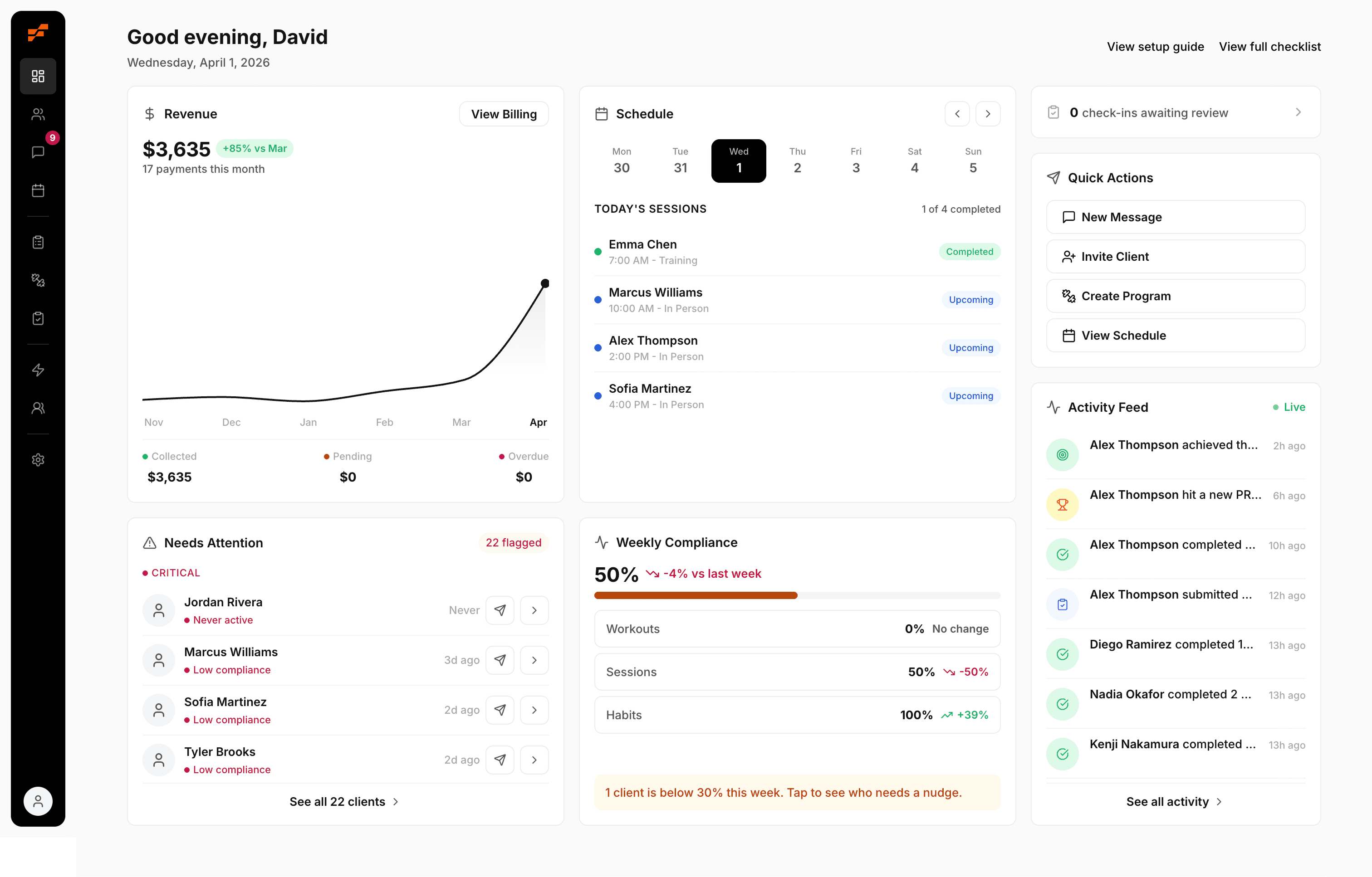
Putting Your Templates to Work in FitCentral
Build once, assign fast
Migrate clients without wrecking continuity
Your 24-Hour Action Plan to Reclaim Your Time
What to do today
Stop Building Programs and Start Building Systems
Most coaches hit the same wall. The roster grows, the results are good, referrals come in, and suddenly programming becomes the part of the week you dread. Not because you don't know how to write a program, but because you're rebuilding the same structure over and over.
That's where the shift happens. You stop thinking, “I need to write workouts,” and start thinking, “I need a system for delivering good workouts repeatedly.”
For coaches managing larger rosters, spreadsheet-based templates can still help. Google Sheets templates with progress charts and conditional formatting can cut programming time by 50% for coaches managing 20 or more clients, and manual tracking errors affect up to 65% of programs, according to Microsoft's fitness tracking resource. That alone should tell you something. The bottleneck usually isn't your coaching knowledge. It's your delivery process.
Practical rule: If you're editing the same program more than three times for similar clients, it should become a template.
A system-based approach also makes you more consistent. Your warm-ups stop getting skipped. Your progression notes stop living in your head. Your substitutions stop being random. And your onboarding gets cleaner, which matters if you're still tightening your process as a coach. If you're building the business side at the same time, this guide to personal trainer requirements is worth reading alongside your programming workflow.
Three signs you need a template system now:
You start from scratch too often and lose hours to copy-paste programming.
Your client notes are scattered across spreadsheets, chats, and memory.
Your programs drift in quality depending on how tired or rushed you are.
Templates are not shortcuts. They are professional standards you can deploy fast.
The Core Components of a Reusable Template
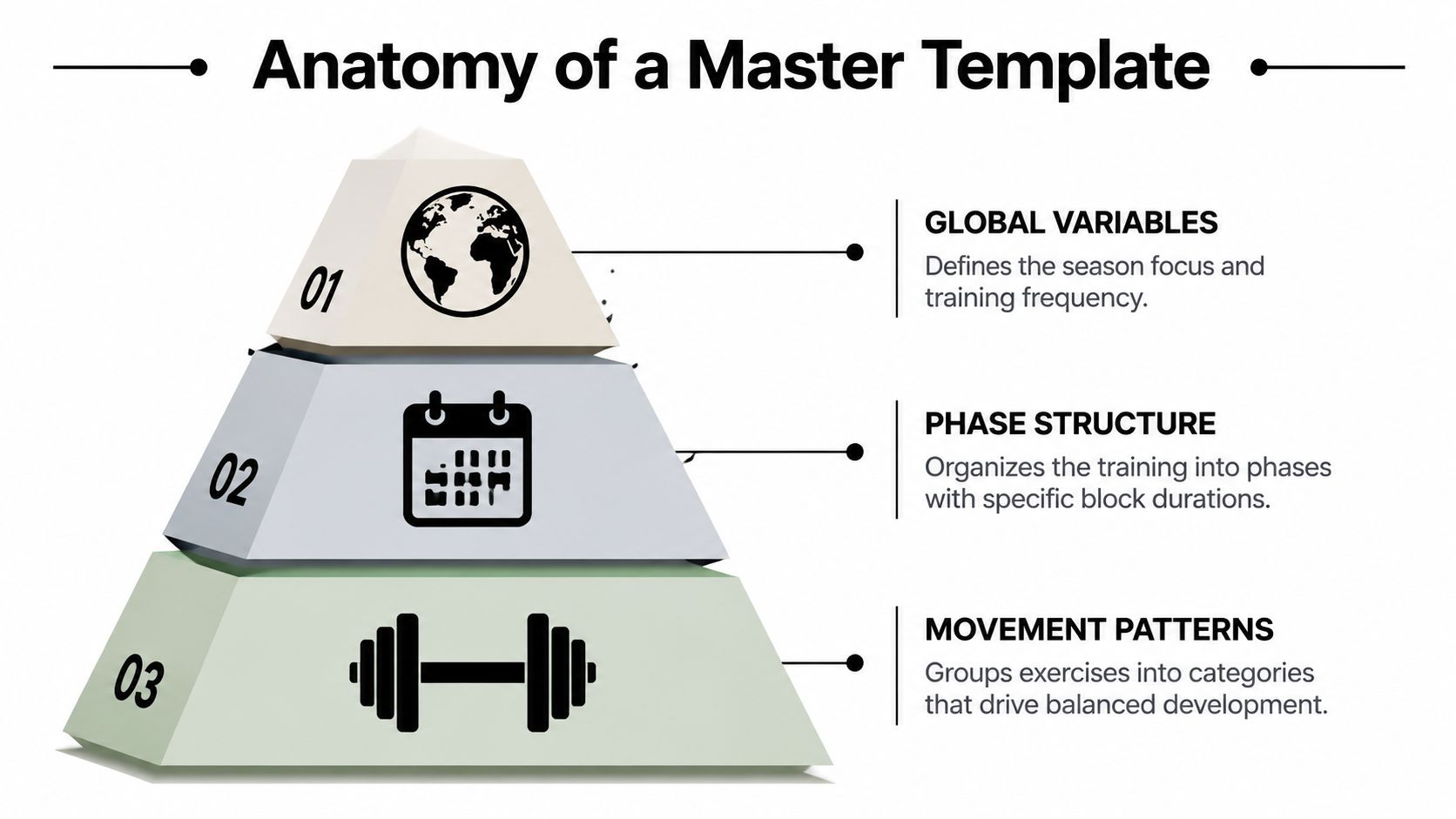
A reusable template is not a document with exercises typed into boxes. It's a framework that tells you what stays fixed, what changes, and how progression happens without you reinventing the wheel.
Build from goals, not exercises
The best templates start upstream. Before you select movements, decide what the template is trying to produce.
A validated framework for evidence-informed programming uses six steps, starting with the primary goal and moving through sub-goals, testing, intervention choice, periodization, and weekly session detail. It also found 70-85% adherence when goals are set collaboratively, as shown in this peer-reviewed framework for evidence-informed programming.
That should shape how you build the template itself. Every master template should include:
Primary goal
Fat loss with strength retention
Hypertrophy with moderate joint stress
Absolute strength in key barbell lifts
Return to training after layoff or injury
Phase intent
Accumulation
Intensification
Deload
Return-to-play or anatomical adaptation
Weekly frequency
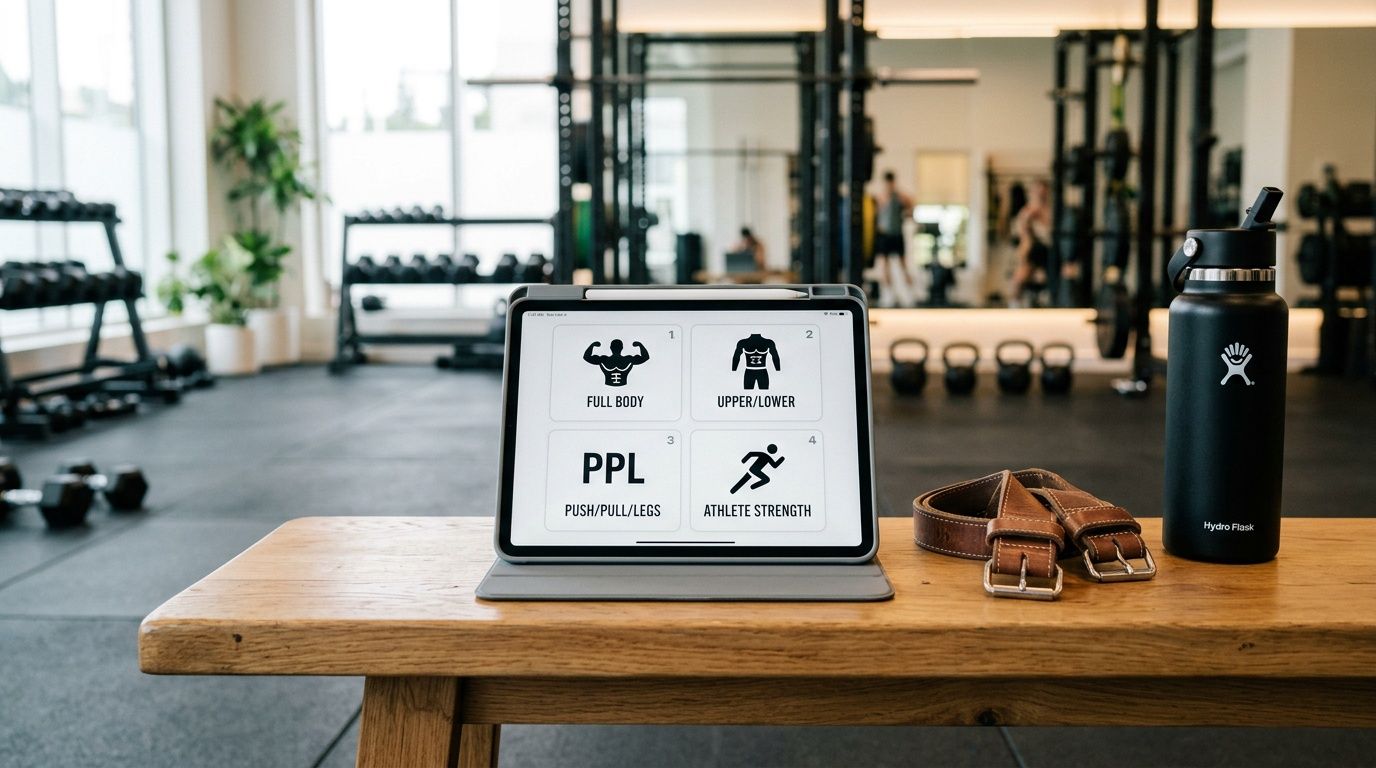
Full body, upper/lower, push-pull-legs, or hybrid
If you want a simple way to think about this, use the same top-down logic you'd use in nutrition planning. This article on examples of macros is about food, but the same coaching principle applies. Big targets first, daily execution second.
Use slots instead of fixed exercises
A strong exercise programming template uses slots.
Not “barbell back squat every time.”
Instead, “primary bilateral knee-dominant lift.”
That one change makes the template reusable across equipment access, injury history, confidence levels, and coaching style.
Here's the slot structure that works well:
Template slot | Purpose | Example options |
|---|---|---|
Primary lift | Main training stress | Squat, deadlift, bench, pull-up |
Secondary lift | Variation or supporting pattern | Front squat, RDL, incline press, row |
Accessory slot | Hypertrophy, weak-point, local endurance | Split squat, lateral raise, ham curl |
Capacity or core slot | Trunk, carries, conditioning, skill | Pallof press, sled push, farmer carry |
Use placeholders for the variables that need to move:
Reps
Sets
Tempo
Rest
RPE or effort target
Coaching cues
Regression and substitution options
A good template should answer two questions fast. What is this session trying to train, and how do I adjust it without rewriting it?
Write the progression rule into the template
Most coaches know progression rules. Fewer bake them directly into the template.
Do that once and your decisions get faster.
Examples:
2-for-2 rule for stable lifts with reliable logging
Load holds when technique breaks down
Rep progression before load progression for newer clients
RPE cap during high-stress weeks
Swap to joint-friendlier variation if pain persists beyond warm-up
The notes section is essential. In this section, the template becomes coaching instead of software output.
Include:
Client-specific cues like “slow the eccentric” or “keep rib cage down”
Pain notes like “neutral-grip press only”
Environment notes like “busy commercial gym” or “home dumbbells only”
Behavior notes like “goes too heavy too early” or “needs short sessions”
Without that notes field, a template becomes rigid. With it, it becomes scalable.
Your Four Foundational Program Templates
You don't need twelve master templates. You need four that cover most of your roster and are easy to adjust.
Hypertrophy template
Use this for general population clients, physique-focused clients, and anyone who needs structure without heavy technical demands.
A practical setup:
Day 1
Primary lower push
Primary horizontal press
Horizontal pull
Single-leg accessory
Isolation superset
Day 2
Hip hinge
Vertical pull
Incline or vertical press
Hamstring accessory
Arms or delts finisher
Day 3
Leg press or squat variation
Chest variation
Row variation
Glute accessory
Core or carry
The logic is simple. Compounds first, accessories later. Use lower rep ranges on primary lifts and higher rep ranges on isolations. Keep enough room for progression and don't bury the client in junk volume.
What works:
Repeating core movement patterns across the week
Using a stable exercise menu for at least a block
Building obvious progression into the main slots
What doesn't:
Swapping exercises every week because the client gets bored
Treating every day like a max-volume pump session
Adding variety where consistency is needed
Absolute strength template
A percentage-based exercise programming template earns its keep in these situations. For intermediate lifters, a 5-week ramp built around percentages is still one of the cleanest ways to organize stress.
The classic structure:
Week 1: 4x5 @65/70/75/80% 1RM
Week 2: 4x4 @67.5/72.5/77.5/82.5%
Week 3: 4x3 @70/75/80/85%
Week 4: 4x2 @72.5/77.5/82.5/87.5%
Week 5: 5x1 @90-95%
Used well, that approach led to 10-20% 1RM gains in intermediate lifters over 12 weeks, compared with 5-10% in simpler linear models, according to this breakdown of percentage-based strength programming.
A simple weekly split:
Day | Main lift | Secondary work | Accessories |
|---|---|---|---|
Day 1 | Squat | Pause squat or split squat | Trunk and posterior chain |
Day 2 | Bench | Close-grip or incline press | Upper back and triceps |
Day 3 | Deadlift | RDL or block pull | Lats and abs |
Day 4 | Pull-up or overhead press | Variation work | Delts, arms, carries |
What works:
Conservative training maxes
Repeating indicator lifts
Holding accessories stable enough to support the main lift
What doesn't:
Inflated 1RM estimates
No reset plan
Adding random conditioning that wrecks recovery
Conditioning template
Many coaches overcomplicate things at this stage. The goal is usually one of three things: improve work capacity, build an aerobic base, or support body composition without frying recovery.
A useful conditioning template has three lanes:
Zone-based aerobic day
Steady work
Simple repeatable modality
Good for compliance and recovery
Interval day
Clear work-to-rest structure
Bike, rower, sled, incline treadmill, or bodyweight circuit
Mixed capacity day
Carries, sleds, med ball work, step-ups, or kettlebell circuits
Low skill, easy to coach, easy to scale
Program by session intent, not by trying to invent a clever finisher every week.
If the client can't tell whether conditioning is improving, the template is too messy.
This is also a great place to run short themed blocks or accountability pushes. If you need ideas for packaging it into something clients engage with, this list of exercise challenge ideas is useful.
Rehab-friendly and special-needs template
This is one of the biggest gaps in most template libraries. Coaches often have templates for muscle gain and fat loss, but nothing structured for clients who need more support, more control, or different cueing.
For clients with disabilities or special needs, especially vision loss, templates need more than exercise selection. They need delivery adjustments.
Key template features:
Instruction field
Auditory cues
Tactile cues
Setup sequence
Machine preference where stability matters
Progression sequence
Anatomical adaptation first
Controlled range before external load
Repetition quality before exercise complexity
Session structure
Predictable flow
Minimal chaotic transitions
Clear movement landmarks
The review summarized by NASM notes that individuals with vision loss benefit from auditory and tactile cueing, machine-based options for stability, and phased progression that begins with anatomical adaptation before deeper individualization, as outlined in NASM's programming and training materials.
A simple structure might look like this:
Supported lower-body pattern
Machine press or supported push
Supported pull
Seated or stable trunk work
Low-complexity aerobic work
This is not “easier” programming. It is more precise programming.
Progression Scaling and Smart Substitutions
A template that doesn't adapt becomes stale fast. A template that adapts too loosely becomes guesswork. The balance is structure plus rules.
When linear progression still works
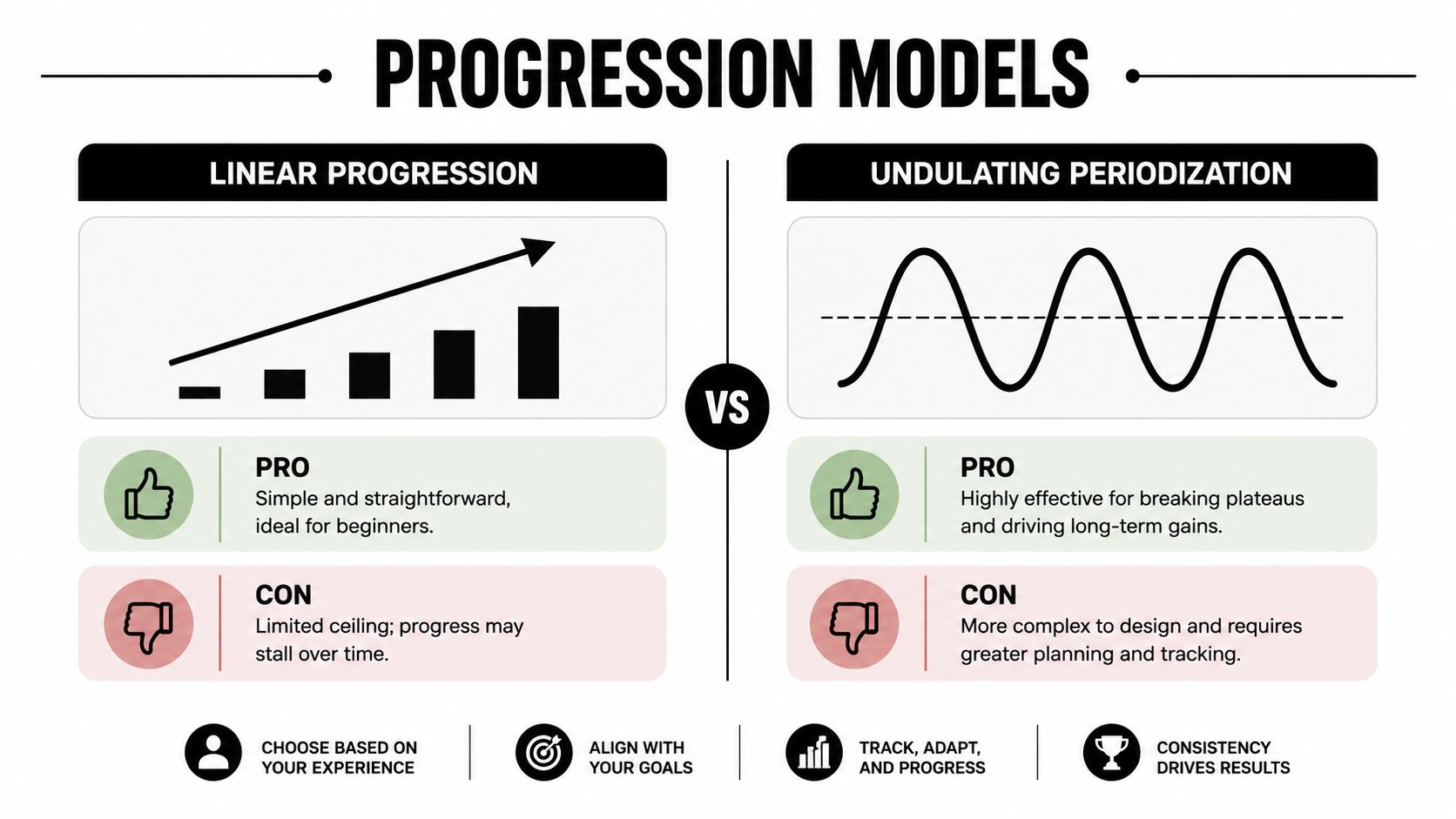
Linear progression still works well when the client is relatively new to structured resistance training, the exercise selection is stable, and recovery is decent.
Use it when:
Technique is still improving quickly
Exercise familiarity is low
Load jumps can stay small
The client needs obvious wins
A linear template is clean because the decision tree is small. Hit the reps with solid form, move the load next time. Miss repeatedly, hold or regress.
That simplicity matters. Especially for clients who already struggle to follow the program.
When to shift to RPE or performance-based adjustment
For more experienced clients, strict linear jumps can become clumsy. Readiness changes. Life stress shows up. Some weeks the plan needs a narrower target.
Use RPE or performance-based rules when:
The client is training hard across multiple stressors
Recovery quality varies week to week
Technique breaks down before muscular effort does
You need autoregulation without rewriting the block
A practical middle ground is simple:
Keep the main lift structured
Let the secondary work flex
Keep the accessory work effort-based
This is also where visible tracking matters for retention. Static PDFs fail because they don't show momentum. As noted earlier, clients leave when progress disappears into the background.
Free PDFs are easy to hand out. They're hard to coach from.
Build a substitution library once
Most programming delays don't come from writing the main plan. They come from interruptions.
No rack.
Shoulder irritated.
Gym packed.
Hotel setup.
Client panicked by barbell work.
That's why every exercise programming template should come with a substitution library.
Here's a simple version:
Original movement | Good substitution | Best use case |
|---|---|---|
Barbell bench press | Dumbbell bench press | Shoulder comfort, home equipment |
Back squat | Goblet squat or leg press | New lifter, limited confidence, equipment constraints |
Deadlift from floor | RDL or trap bar deadlift | Mobility limitation, easier setup |
Pull-up | Lat pulldown or assisted pull-up | Strength limitation, controlled progression |
Barbell row | Chest-supported row | Low back fatigue, cleaner execution |
Walking lunge | Split squat or step-up | Space issues, balance concerns |
Keep the movement pattern and training effect as close as possible. Don't substitute based on muscle names alone. Substitute based on function, setup, and client confidence.
A good rule for substitutions:
Preserve the pattern
Match the intent
Lower the barrier
Keep the logging simple
That's how one template works for five clients or fifty.
Putting Your Templates to Work in FitCentral
A template is useful on paper. It becomes valuable when it lives inside your coaching workflow, where you can assign it quickly, track it clearly, and adjust it without breaking continuity.
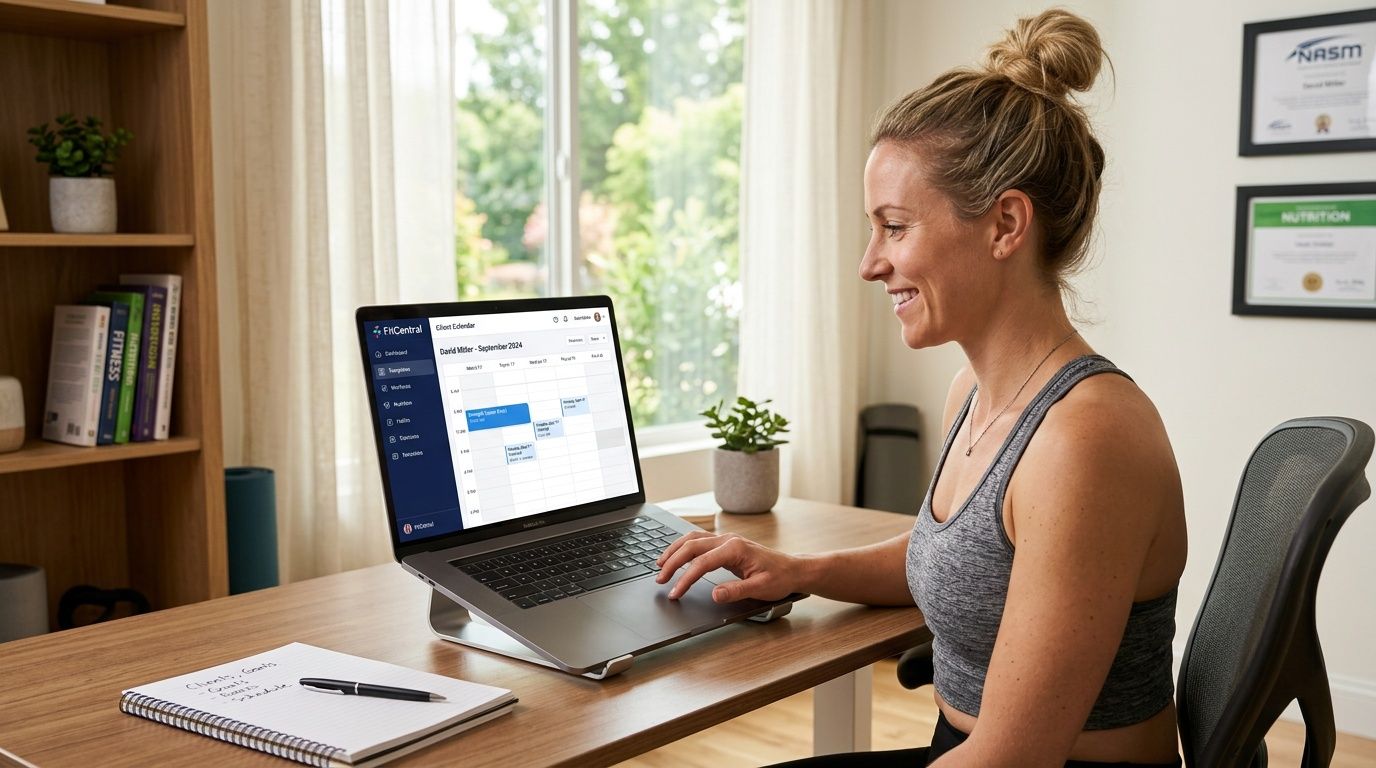
David Spitdowski, FitCentral's co-founder, still coaches clients himself. That matters because the workflow reflects real coaching problems, not a product team guessing what trainers need. If you've been stuck with buggy apps, price creep, or platforms that stopped listening after getting bigger, you can feel the difference in tools built by people who still do the work.
Build once, assign fast
The right workflow looks like this:
Create the master program
Name it by goal and split
Add the main slots
Set default variables for sets, reps, tempo, and rest
Save it as a reusable template
Keep the structure fixed
Leave room for exercise swaps and note fields
Assign and individualize
Swap the movement, not the whole session
Add cues, injury notes, and setup instructions
Adjust progression rules where needed
That's where software beats a loose spreadsheet. The client logs every set in one place, sees past performance, and doesn't need three separate apps to understand what to do next.
Reliable delivery changes compliance. FitCentral's beta tests showed 95% client compliance rates, helped by mobile logging, rest timers, past performance visibility, and automated reminders, and you can compare that workflow with what most coaches still patch together through this overview of tools trainers use inside Excel-based tracking environments.
Here's what that system removes from your week:
Rebuilding identical sessions
Searching old chats for load history
Manually reminding clients to train
Losing exercise notes when you update a block
Migrate clients without wrecking continuity
Migration is where many coaches stall. They stay with bad systems because switching feels risky.
The cleanest way to move clients over is this:
Start with active templates, not old archives
Bring over current exercises, recent loads, and top cues
Tag exceptions early, such as pain notes or home-gym limits
Leave historical clutter behind unless it affects current decisions
Most clients don't care whether every old spreadsheet tab survives. They care that the next session is clear and the program still feels personal.
After the new workflow is live, show them one thing immediately. Their previous performance inside the current exercise. That closes the loop fast.
A quick look at the workflow helps:
If your current setup makes simple changes feel fragile, that isn't a programming problem. It's an operations problem.
Your 24-Hour Action Plan to Reclaim Your Time
You do not need a full rebuild this week. You need one repeatable win.
What to do today
1. Pick one client type you program for constantly
Choose the profile you see most often.
Examples:
General fat-loss client training 3 days per week
Hypertrophy client with full gym access
Strength client on an upper/lower split
Return-to-training client who needs conservative loading
Build one master exercise programming template for that person only.
2. Turn that program into slots
Open your current best program and remove fixed exercise names where possible.
Replace them with:
Primary squat pattern
Primary push
Horizontal pull
Single-leg accessory
Trunk or carry finisher
Then add placeholders for:
Sets
Reps
Tempo
Rest
RPE
Coaching notes
Substitutions
If you coach remotely or from home often, this article on personal training at home is a good prompt for what substitutions and equipment notes to build in from day one.
3. Write one progression rule and one substitution rule
Keep it simple.
For example:
Progress load when target reps are exceeded twice with clean form
Swap barbell pressing to dumbbell pressing if shoulder comfort drops
That alone removes a surprising amount of decision fatigue.
4. Assign it to three current clients this week
Not ten. Three.
Use the same structure. Change only:
Exercise selection
Starting loads
Client notes
Progression pace
The first goal isn't perfection. It's proving to yourself that your programming system can save time without lowering quality.
By the end of the week, you should know two things. Which parts of the template stayed stable, and which parts needed flexibility. That's how a usable system gets built.
If you're ready to stop stitching together spreadsheets, chats, and reminders, FitCentral gives you a cleaner way to run your programming system. You can build templates once, assign them fast, track client performance in one place, and spend more of your week coaching instead of doing admin.
See also



Ready to stop fighting your software?
FitCentral gives you everything you need to manage clients, deliver results, and grow your business. Sign up today.